Instead of talking about photography today, I am going to save you the ten minutes of information, news, snippets and other tangential stuff, because something much more important needs your attention today. Your right to elect your leaders is before you. So…go vote! Today! This is one of the few countries in the world where we enjoy the ability to elect our leaders. You may not think your vote matters, but it does! It doesn’t matter what you believe or who you vote for. McCain, Obama, Nader, or Mickey Mouse – vote today! Not only do we enjoy the right to vote, it is our civic responsibility to do so. So, no matter what you believe or who you vote for, just get out and vote! See you back here tomorrow (with the weekly podcast!).
In the tightening economy, many of us are considering additional ways of supplementing our income, and as hobbyist photographers, we all have wondered at times whether we could parlay our hobbies into sources of revenue. For a short time I even considered this blog as a possible method for generating revenue. By and large though, I found that the blog was not well-positioned to be a significant source of revenue, for a number of reasons.
So, I decided to turn the idea arond, and think about whether my photography could be considered as a source of revenue. Thus far I have resisted the urge to do so, primarily because I don’t want to add the stress of running a side business to my enjoyment of photography. Nevertheless, I have considered it seriously, and in so doing, read quite a bit about it. And what have I learned? Quite a bit actually. But today, I’d like to share 5 tips about how to make money off your photos.
5 Tips for Making Money off your Photos
Magazines – Magazines are always looking for fresh images for stories. Get yourself a copy of The Photographers Market (most recent publication year is 2008)), and find out the magazines that match your interests most and send them the appropriate information as specified. Don’t be dejected if at first you don’t garner much interest. There are many others like you also submitting images regularly and it can take a while.
Stock Photography – Stock photo sites like Getty, iStockPhoto, Crestock, and a host of others offer a great venue for tapping into the enthusiast photographer market. You simply create an account, upload some sample images, and once you get enough “approved” you are off and running. The problem here is that your images are being sold for mere pennies (in your pocket). So, in order to generate sufficient revenue, you need to have hundreds upon hundreds of sales. In turn this means you need a portfolio of at least that many images available to get any kind of penetration into the stock market genre. This is becoming quite crowded, but if you are talented, and have the library – upload away!
Consignment – An often untapped resource is local restaurants and businesses. Go talk to small business owners whether it be a restaurant around the corner, a body shop, or other such enterprise, and offer to decorate their walls for free. In exchange, you get free exposure and possible image sales. Often the business owner will want at least a cut on the profits, so don’t be shocked if they ask for it. It also helps to have several images all ready to hang, so go prepared with at least 5 images in 3 different sizes. I would suggest a 5×7, 8,10, and 11×14 matted and framed out to 8×10, 11×14, and 16×20 respectively. Be sure you are also prepared to be told “No.” Persistence and self-confidence here is key. It also helps if you scope the place out ahead of time. You can do so by eating a meal there, having some auto work done, or going in for a cup of coffee (whatever, you get the idea).
Medical Offices – Here is a real sleeper that can pay off in spades. Doctors offices love to have fine art on the wall – it can sooth anxious or sick patients. Even if they have a set of artwork already displayed, it never hurts to ask. Simply offer a rotation for the next month, or 2 months, or 6 months, and be prepared to offer a portion of image sales to them (doctors like to make money too – or so I’ve heard!). Also, don’t limit yourself to the traditional image of a doctor’s office – go see dentists offices, orthopedists, optometrists, orthopedics, etc. As always, be prepared and quick – these guys (and gals) make money off their time, so the more time you spend trying to convince them it’s a good idea, the less time they spend seeing patients, and the less time they are making money. Go in, be quick, be professional, wow them with great images, and get out.
Banks are another great resource. Try seeing if your local branch will let you set out cards on display, or perhaps hang an image or two. Some banks even offer this service to local businesses. WHen I was in SC, my local bank had one day every week where a local business was featured. I put my cards out, and once or twice I even had my info up on display. It generated some interest and even a few gigs. Once I found out about our move to Colorado, I stopped though, for obvious reasons, and once we’re more settled down here I’l be doing the same.
So, there’s 5 tips for you on how to make money off your photos. The common theme here is to have your images out there. If you don’t put your images into the hands of potential buyers, no one will ever buy anything from you. Oh yeah, and don’t forget to keep at least 5-10 business cards or calling cards with you at all times. Keep ten in your car, ten in your wallet, and ten in your coat. You never know when someone will say “Do you know a good photographer?” and you’l be kicking yourself for not having a card wth you!
There they are, 5 tips for making money off your photos. Anyone else used these tips with any success? What about other tips? Feel free to share your own thoughts, suggestions, and ideas in the comments section (or via email.) Hope everyone’s weekend was good, and we’l see you back here tomorrow for the weekly podcast! Happy shooting!
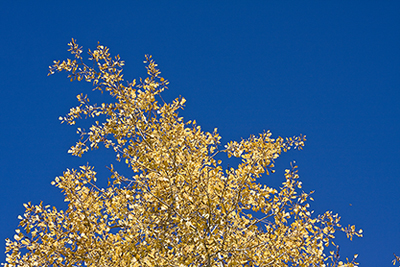
You all got to know Jason Moore from the most recent “Thursday Thoughts” session, and have also been referred to his Geographic Composition Series in the past from participation. Well, the latest in the series, titled Autumn, has been released today, so CB is giving a rare double post today! Here’s the shot I shared (which you’ve seen here before), but do stop over to see the other ones from notables like Michael Palmer, David Jones, Andy Smith, and Jeff Kuhns (of course Jason M. has a shot in there too). Excellent series of photos and I am honored to be a part of it!
Well, I finally got the Cactus gear that I ordered online at GadgetInfinity last week. I had ordered their wireless trigger/receiver combo set and an extra receiver for the purpose of getting two lights to fire. I excitedly opened all the packaging and unwrapped it all, then – stop, hold the phones, and check this out – I read the directions!
Yes, that’s right, an admitted geek read directions to make sure I utilize them right. After reading about these kinds of things on David Hobby’s Strobist site and over on the Flickr Colorado Strobist site, I wanted to make sure I don’t accidentally fry either my precious 40D or the cheapo 550EX because of improper usage.
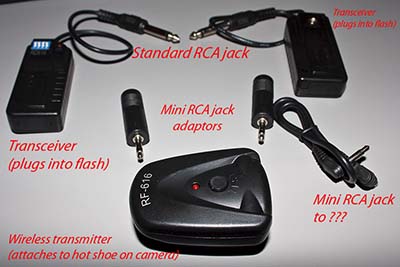
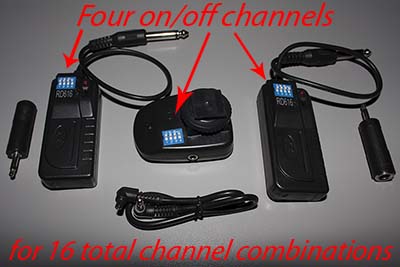
Well, after reading through the massive 1/4 page sheet of instructions, I was confused so I sorted back through the gear and here’s what I have:
So, I am not sure what the one cable is for on the right of the trigger (transmitter). Is that supposed to plug into the transmitter, or the transceiver? If you look at the back of the transceiver, there’s a funky little plug there that looks as if it is made to accept the one female end to that spare cable. Meanwhile, the other end looks to be another RCA mini, and the side receptacle on the transmitter is built to take an RCA mini. Not sure I understand why, as the trigger would normally be connected to the hot shoe of your flash.
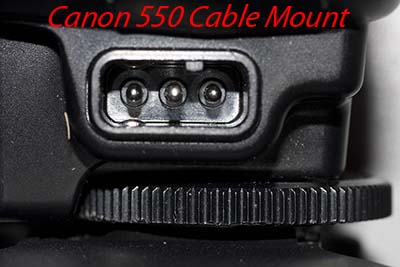
Finally, it looks as though in order to get these triggers to work with a Canon 550EX, I would need an adaptor cable of sorts that would change an RCA mini to a female version of that three-prong set on the 550. Any ideas from those out in the blogosphere?
Lest I forget you, dear readers, here’s a brief bout of humor courtesy of What the Duck:
HAPPY HALOWEEN EVERYONE!!!
Don’t get too hyped up on sugar – you’ll get camera shake! Happy shooting all and we’ll see you back here on Monday! Thanks in advance to anyone willing to help me sort out this wireless trigger confusion! 🙂
Jason D. Moore is a well known photographer and graphic designer, with ACE certifications on Adobe PS CS3, has extensive experience as a videographer, is a member of the Adobe Acrobat User Community, and also has some extensive experience in web development. Suffice to say, he is very well-known for his Photography and Photoshop Blogroll, and has had several mentions on Photoshop User TV. He also hosts photo walks in the Southern Tier of New York and is just a super nice guy. Last week he and I had a chance to exchange a few emails and I learned quite a bit about him and his background from our discussion.
Q. Everyone always wants to know some of the basics, so let’s get a few things out of the way at once here…How long have you been a photographer? A. I’ve been taking pictures on and off since I was a kid. When I was the editor of my high school yearbook I began to see images more in terms of their composition and how they conveyed a message when placed together in a collection. I got a lot from my dad when I would go along with him on video shoots growing up and learned how to take it from just conveying a message to telling a story. I didn’t do much with photography in college, but rediscovered my love for it while studying abroad during my senior year with Semester at Sea (www.semesteratsea.com) and then began taking it really seriously with my first dSLR – a Nikon D50 – back in 2006.
Q. 2. Canon or Nikon? A. Nikon
Q. Mac or PC? A. PC
Q. Chocolate or Vanilla? A. Vanilla – but I also really like Black Raspberry, Peanut Butter Cup, Cookies and Cream, and Stephen Colbert’s Americone Dream.
Q. Moving into a little more granularity, photographers often enjoy hearing helpful and constructive critiques of their work, as we are aware of how much we can grow from it. However, we’ve also all had the “nice shot” and “cool” comments when we’ve shared our work. What was the singular most useful critique or comment you’ve ever had on work you’ve shared publicly?
A. I’m not sure it’s considered a critique that I learned from but I always remember Scott Kelby telling me, “You’ve got some very inspiring work—a great eye (which is what it’s all about), and some great Photoshop skills to boot!” And when one of my shots was picked as a NAPP Editor’s Choice, Larry Becker said, “This (and many other images in this portfolio) make us want to be there. This is beautiful art.” Making viewers want to be there is a high goal to strive for and it pushes me to try harder every time I go out shooting to attain it. These comments would mean a lot no matter who said them, but because they come from men I respect and who know what they are talking about, it really touched me.
Q. If someone was asking you for an honest critique of their work, what 3 factors would you look at most (excluding friendships or family relatives, we’re talking professional or fellow photographer-types here)?
A. Technically speaking I look at framing/composition, color/tone, and sharpness/depth of field (not in any particular order). However, while all of those things are important, I’ve always been a believer in art trumping the technical. I look for a sense of style, individuality and a unique approach/perspective, and most of all, that the piece tells a story. If it moves me, the technical stuff doesn’t matter as much. Q. Got any war stories from field shoots or outings that you can or would be willing to share?
A. It’s not a photography story, but a videography story. A few years ago at my old job I was headed out on a shoot about 4 hours away. Before I left, I checked all my gear to make sure I wasn’t forgetting anything – batteries, microphones, cables, directions, etc. – and headed out the door. I was already running a little bit late. When I got about an hour and a half into my drive, I suddenly realized that I never checked to make sure I had enough tape for the day. At the next service area I reached into the camera bag and realized that, not only did I not have enough tape for the day, I didn’t have any! So I had to drive back an hour and a half to grab the tapes that were sitting right next to where the camera bag was. At the end of the day, I was advised of a “better” route back home which actually added an extra hour or so to the trip. So I ended up spending 4 extra hours in the car.
There are also the couple of times when I was doing some live event work when, due to scheduling or technical issues of one sort or another, I had to endure 40-hour work days, including setup of a convention center’s worth of sound and video equipment and full-day sessions of conferences.
Q. If you had to choose between the gear or the software as the only way to create, which would it be and why?
A. I learned a lot about Photoshop before I learned a whole lot about Photography and I think you can do some amazing things when the two are working in concert. With that said, I’d have to go with the camera over the software. Photographers were creating breathtaking shots long before there was Photoshop and really, without the shot, the software isn’t much use, is it?
Q. Any final thoughts you’d like to share about the state of photography or any catch phrases that you keep in mind when shooting?
A. I’m a details kind of guy and I really like the phrase “get close, then get closer.” I think I heard it from Derek Story but can’t be certain. It’s a concept I’ve heard over and over but that says it really well. One of the things I strive for is to find a part that tells of the whole. Sometimes you don’t need to show all of something for your audience to get it. Sometimes just a small piece can say more than the entire subject and you will usually find that your shots are more interesting that way too!
I’d like to thank Jason for taking the time out of his busy schedule to share some of his thoughts and experiences with the readership here. Please stop over at this website to thank him yourself and to see his portfolio of work. He can be found at: http://www.jasondmoore.com
It’s a little late in coming (busy morning today at work), but here is the Week 17 edition of “What’s This?”:
As always, those who correctly identify the image from this cropped portion win fabulous prizes, win fame and fortune, money, money, money, and lots of photo gear and software….yeah okay, that part’s not true…but you do get bragging rights!
Some of you may have noticed that there is now a widget on the sidebar for my twitter account. It’s kind of fun actually and I can see how so many are addicted. I’m trying to post there more regularly, but cannot guarantee a lot of activity. It’s really just daily stuff – work stuff, occasionally photo-related, but if you want a glimpse of the “personal me”, that would be the place to find out.
Also, don’t forget – today is the last day to vote in the TWIP photo contest. The prize is a 1st generation Drobo. I am currently in 7th place for vote tallies, so any help would be appreciated (not that I expect to win or anything, but stranger things have happened…) The link to vote is here (you have to have a Photrade account)
In other news, be sure to stop in tomorrow for the latest Thursday Thoughts with Jason D. Moore! Thanks in advance to Jason for taking the time to sit down with me and talk about a variety of photography subjects. It really was an informative session and I learned a little more about him (which of course is the goal…). If you’d like to be featured in an upcoming edition of Thursday Thoughts, and get some free referrals to your blog, let me know in the comments or via email and we’ll see what we can work out to help one another!
Well, that’s it for this Wednesday. Happy shooting and we’ll see you back here tomorrow with Jason D. Moore!
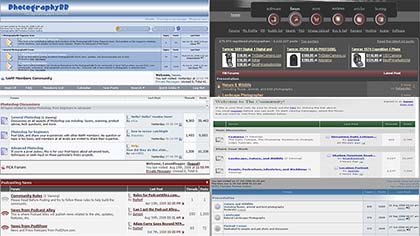
Today, I take a somewhat introductory look at the prevalence of photography forums across the internet. With communities cropping up for every nuance and interest, one literally has dozens, if not hundreds upon thousands to choose from. Everything from lighting, to portraiture, landscape, architecture, and even food photography has a community of avid participants. What to make of it all? Which ones are good and which are not as beneficial as others? I’ve referenced a few communities here from time to time, including ones that I still participate in on a regular and on-going basis.
As my interests wax and wane into different specifics, I find myself moving from one community to another in search of what I am looking for and I suspect others do the same. What are we looking for? Well, that can vary depending on where we’ve been and where we want to go. So, to kind of help clear the air on all the vagaries of photo forums online, I cobbled together my weekly podcast to talk about three basic types that I see all over the internet.
Do you participate in forums? What kinds of information do you look for when you visit these forums? What types of forums are they? If you had to classify them according to the 3 main types referred to in the podcast, where would your community fall? Here’s a chance to promote your own communities in new and interesting ways, by sharing your thoughts in the comments. Let me know and I’ll share the best of these in next Tuesday’s podcast. In the meantime, Happy Shooting and we’ll see you back here again tomorrow.
P.S. Don’t forget to vote for my photo over at the TWIP contest on Photrade here – only 2 days left!
Anyone know the Toby Keith song where he sings to his woman that most of the time it’s about her, but every once and a while he wants it to be about him? Well, today that is the theme for the blog – ME. Rest assured though, there is a relation to photography though…
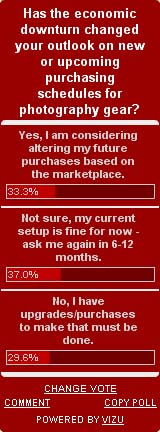
First off, thanks to the 27 people who participated in the last poll on whether the economic downturn was shaping their photo purchases. The results were pretty even:
The new poll is now up and on the side panel, so for the RSS readers, be sure to visit the blog to see the question and possible answers, as well as participate! It’d be really cool if a poll broke the 50 count barrier this go around, so let’s ROCK THE VOTE!
In other “me” news, the photo contest over at TWIP (This Week In Photography) only has three days left, and every vote counts. Again, the photo is listed in the side panel, but you can visit the Photrade site directly to vote by following this link here:
Since this last weekend was a particularly non-photo themed weekend, there’s not much else to share for now. Tomorrow will be another day with a new podcast and other photo news and information, so be sure to stop back in then. Happy Shooting, watch those apertures, and we’ll see you back here again tomorrow!
As we head into the weekend, for those who are picking up the blog via RSS feeds and never made it over to the site, I had enough email from you requesting to share these in a dedicated blog post. So, a little addendum post to get you through the weekend, here are the headers from this past week:
Monday
Tuesday
Wednesday
Thursday
Friday
Any in particular jump out at anyone? Feel free to share your thoughts, views, etc. in the comments. In the meantime, Happy Shooting, and we’ll see you back here again on Monday!
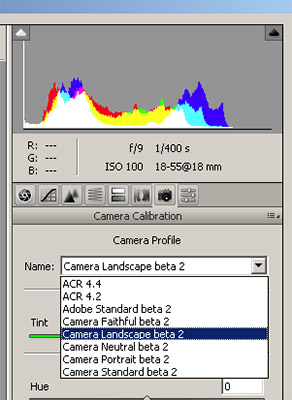
So, today I had the day off work, and was catching up on a few things. I read through most of my piled up photo magazines, caught up on some NAPP tutorials, and some overdue email replies to various asundry things. One of the tutorials I watched was from Matt Kloskowski on installing camera profiles for ACR in both LR and CS3/CS4. It’s pretty cool stuff.
Basically, Adobe has worked with various camera vendors to get the ACR to approximate the same colors that are shown in the vendor proprietary software (Digital Photo Professional for Canon and Capture NX for Nikon, and a whole host of others.) Matt did a great job of showing how close it gets while even still in beta. I was convinced enough to go ahead and download the plugin to use in CS3. Fair warning though, you do need at least ACR version 4.5 or higher to use these profiles (I have 4.6 installed). Since my bodies are Canon-specific my interface may look a little different, but thought I’d share the screenshot of what it looks like for me:
My thoughts are that the Camera Landscape beta is the closest to what DPP shows. Since it’s all happening in camera raw, as Matt stated, it just gives you a better starting point with less editing to get to your final results. I really can’t wait to see how this develops and moves out of beta. Just hope that Adobe sees fit to release the final shipping version for CS3 owners as well as CS4. What about others – has anyone else installed this? How do your pictures look? Are they close to your vendor software? Feel free to jump in with the comments!
In other news for Friday, this is the last day to participate in the economy-photography poll from the sidebar. You RSS readers – stop in and vote, we’re trying to break 30, and only have until midnight! Other than that, it’s been a great day – I even got some cool shots of the dog after our walk with the sunlight glistening in her eyes.
I’ll leave with my favorite What the Duck of the Week. Happy shooting and we’ll see you back here again on Monday – have a great weekend!