
Thursday Thoughts with….Andrew “Ostman” Smith

As a proud member of Jason Moore’s “P&P Blogroll” I’ve had a unique opportunity to find and become acquainted with several photographers who I might otherwise not had the pleasure of knowing.  One such talented individual is Andrew Smith, of Visual Realia.  Andrew’s blog is a unique combination of photography and poetry.  It is truly an amazing combination and well worth adding to your RSS feeds.  Andrew agreed to participate in the Thursday Thoughts here at CB, so without further ado, here’s some great insight into his talents:

Q:  Everyone always wants to know some of the basics, so let’s get a few things out of the way at once here…How long have you been a photographer?
A:  I remember having a camera or two as a child, and enjoyed using them, but was pretty much just using point and shoot film cameras until digitals became affordable for the mass market. My blog’s been up and running for a few years now.

Q:  Canon or Nikon?
A:  Wait a minute… this is one of those trick questions, isn’t it? Canon? Nikon? I’m an Olympus man! My past two cameras have been made by Olympus, and I love them both. Price for performance is excellent. I’m surprised more people in the blogging world aren’t Olympus users; reviews are usually strong. Even the fact that your question doesn’t include Olympus is somewhat telling about Olympus’ need to think about their marketing. My Olympus behaves very consistently, and has provided me with a very pleasant user experience.  By the way, the first camera I remember having was shaped like Mickey Mouse’s head, and you pulled his one ear down to shoot. I’m hoping “Mouse” will be added to Canon and Nikon in this question in the future.

Q:  Fair enough, I’ll start including more camera vendors in future questions, and thanks for the good info about Olympus!  So, moving along, Mac or PC  (and I’ll add Linux to the mix given your last response! 🙂 )?
A:  My first computer was an Apple IIGS, which was under-appreciated. It treated me well, and I’ve happily stuck with Apple products since. I have one of the 2008 towers, which is really friendly with Photoshop.

Q;  Chocolate or Vanilla?
A:  I love and make homemade vanilla ice cream with a recipe that dates back to at least my grandparents. And none of that wimpy “cooking the egg” thing.

Q:  Okay, now I am getting hungry, but let’s continue into something with a little more granularity,.  Photographers often enjoy hearing helpful and constructive critiques of their work, as we are aware of how much we can grow from it.  However, we’ve also all had the “nice shot” and “cool” comments when we’ve shared our work.  With that backdrop, what was the singular most useful critique or comment you’ve ever had on work you’ve shared publicly?
A:  I’m going to buck the standard thought in “serious” photography and say that I have no problem with those “cool” and “nice shot” comments, and even proudly admit that I’ll leave such comments myself, if they fit. Don’t get me wrong; I’m quite happy to get specific feedback about a technique, framing, tonal use, depth of field, etc. If I see a photograph online that strikes me as using such a technique particularly well, I’ll comment on that. There are also times, however, when a photograph loads on a web page (or I see a print) and my brain immediately screams, “Cool!” When a photograph quickly grabs me on an emotional level, that’s a success for the photographer. While I could break apart the image and try to figure out what makes the photograph work, quite frankly, that’s not as important to me as enjoying the image as one entity. Learn techniques, but enjoy the photograph. We’ve all seen web sites where commenting on techniques or aspects of a photograph seem more about the commenter’s desire to show off their photography vocabulary rather than saying anything new about the work. If I share a photo that causes a viewer to give me a one word emotional response, that’s pretty “cool” to me!

Q:  Well, my next question would be a follow-up one asking “Who said it?”, but clearly that’s not needed here.  Great perspective and it will definitely make me reconsider the value of the short answer-critique.  SO, let’s move onto the next “critique” question:  If someone was asking you for an honest critique of their work, what 3 factors would you look at most (excluding friendships or family relatives, we’re talking professional or fellow photographer-types here)?
A:  After my response above, I better include emotional or communication aspects. Technically, I agree with a lot of photographers that light can never be stressed enough, and line or movement always interests me.

Q:  Wow, you’re gonna make me re-think the entire questionnaire here, but this is really an interesting perspective to things.  What about personal experiences from out in the field?  Got any war stories from field shoots or outings that you can or would be willing to share?
A:  Since I do not derive my main source of income from photography, I’m usually not in situations where war stories present themselves! Worst-case scenario, I put down the camera and enjoy a beautiful walk and the interesting world around me.  On a lighter note, I’ll always remember photo walks where onlookers eye the mass of photographers and wonder what grand media event is occurring.

Q:  That happened in Golden, CO when we did the Scott Kelby walk too!  Someone asked me who was coming to town and I answered “Angelina Jolie and Brad Pitt for a half second before coming clean.”  It is kind of fun to see that reaction though.  Anyway, I digress…back on topic, if you had to choose between the gear or the software as the only way to create, which would it be and why?
A:  Toss up. I’ve seen amazing photographs from pinhole cameras that clearly show that gear means nothing compared to imagination. Software skills can sometimes bring out the hidden beauty in a captured moment, but the photographer using the program needs to be able to know where to look for that beauty.  In the digital world, it’s hard to separate the camera, the digital file and the software. Each is a part of the process that will hopefully bring out something that communicates a moment as seen by the photographer. In the end, both the gear and software are nothing compared to the idea and the person creating it.

Q:  Any final thoughts you’d like to share about the state of photography or any catch phrases that you keep in mind when shooting?

A:  Photography is a tool to share something. Maybe it’s a literal document of a moment in time, or possibly an image from the photographer’s mind. Either way, focus on the technique beforehand and communication as you open the shutter.  A great jazz musician learns chords, scales and the work of those before him or her. There’s intense practice that allows the musician to internalize those techniques and skills, so when the moment comes to improvise in front of an audience, the technical aspects don’t get in the way of the artistic message.  Learn what you can and look at the work of artists in all mediums. Practice the skills and techniques you need, pick your time and place, push those technical thoughts aside and enjoy improvising.

Thanks Andy for such a thoughtful set of answers and for taking the time to participate in the latest Thursday Thoughts.  It shows just how quickly blinders can become a part of your vision and that we all just seek to be aware of when we might be putting blinders on!

So, that was it with Andy, and thanks again to him for taking the time to sit down with CB for a One-on-One.  Please stop over to his website at Visual Realia and enjoy his work.  Leave some comments too (even if they’re one-word comments! 🙂 )

Happy shooting all, and we’ll see you back here again tomorrow!
Nitty Gritty Details

The weekly podcast that usually goes up on Tuesdays was supplanted yesterday by the Election Day message. Returning to photography topics today, the weekly podcast has been posted and is ready for your listening enjoyment. I’ll have some notes related to the podcast to include at the end of today’s post.

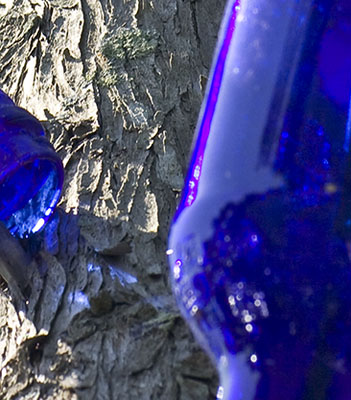
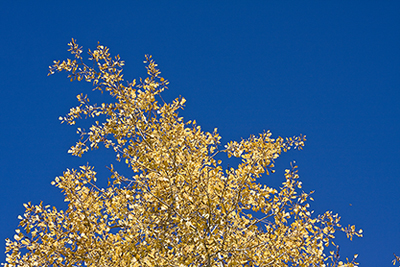
In the interests of keeping the “What’s This?” on schedule, we are now in week 18. Last week’s was in fact, the stained glass that a reader correctly identified rather quickly. So, I am hopefully going to make things a little more intriguing for you this week. Let’s see the first to identify this image:

What's This? - Week 18

Podcast Notes:

  1. Gadget Infinity is the site to get the Cactus Triggers from – be careful to order for the correct lights
  2. There are some great patterns inside CS3 (not available in CS4 anymore), just go to the following folder to find them: C:\Program Files\Adobe\Adobe Photoshop CS3\Presets\Patterns\PostScript Patterns
  3. Q&A – Recording Software, Crop Factors, and photo terminology

Wrap-up: Contests, Road Tip, & Polls

Happy shooting all, watch those apertures, and we’ll see you back here again tomorrow!
[display_podcast]

Making Money off your Photos

In the tightening economy, many of us are considering additional ways of supplementing our income, and as hobbyist photographers, we all have wondered at times whether we could parlay our hobbies into sources of revenue.  For a short time I even considered this blog as a possible method for generating revenue.  By and large though, I found that the blog was not well-positioned to be a significant source of revenue, for a number of reasons.

So, I decided to turn the idea arond, and think about whether my photography could be considered as a source of revenue.  Thus far I have resisted the urge to do so, primarily because I don’t want to add the stress of running a side business to my enjoyment of photography.  Nevertheless, I have considered it seriously, and in so doing, read quite a bit about it.  And what have I learned?  Quite a bit actually.  But today, I’d like to share 5 tips about how to make money off your photos.

5 Tips for Making Money off your Photos

  1. Magazines – Magazines are always looking for fresh images for stories.  Get yourself a copy of The Photographers Market (most recent publication year is 2008)), and find out the magazines that match your interests most and send them the appropriate information as specified.  Don’t be dejected if at first you don’t garner much interest.  There are many others like you also submitting images regularly and it can take a while.
  2. Stock Photography – Stock photo sites like Getty, iStockPhoto, Crestock, and a host of others offer a great venue for tapping into the enthusiast photographer market.  You simply create an account, upload some sample images, and once you get enough “approved” you are off and running.  The problem here is that your images are being sold for mere pennies (in your pocket).  So, in order to generate sufficient revenue, you need to have hundreds upon hundreds of sales.  In turn this means you need a portfolio of at least that many images available to get any kind of penetration into the stock market genre.  This is becoming quite crowded, but if you are talented, and have the library – upload away!
  3. Consignment – An often untapped resource is local restaurants and businesses.  Go talk to small business owners whether it be a restaurant around the corner, a body shop, or other such enterprise, and offer to decorate their walls for free.  In exchange, you get free exposure and possible image sales.  Often the business owner will want at least a cut on the profits, so don’t be shocked if they ask for it.  It also helps to have several images all ready to hang, so go prepared with at least 5 images in 3 different sizes.  I would suggest a 5×7, 8,10, and 11×14 matted and framed out to 8×10, 11×14, and 16×20 respectively.  Be sure you are also prepared to be told “No.”  Persistence and self-confidence here is key.  It also helps if you scope the place out ahead of time.  You can do so by eating a meal there, having some auto work done, or going in for a cup of coffee (whatever, you get the idea).
  4. Medical Offices – Here is a real sleeper that can pay off in spades.  Doctors offices love to have fine art on the wall – it can sooth anxious or sick patients.  Even if they have a set of artwork already displayed, it never hurts to ask.  Simply offer a rotation for the next month, or 2 months, or 6 months, and be prepared to offer a portion of image sales to them (doctors like to make money too – or so I’ve heard!).  Also, don’t limit yourself to the traditional image of a doctor’s office – go see dentists offices, orthopedists, optometrists, orthopedics, etc.  As always, be prepared and quick – these guys (and gals) make money off their time, so the more time you spend trying to convince them it’s a good idea, the less time they spend seeing patients, and the less time they are making money.  Go in, be quick, be professional, wow them with great images, and get out.
  5. Banks are another great resource.  Try seeing if your local branch will let you set out cards on display, or perhaps hang an image or two.  Some banks even offer this service to local businesses.  WHen I was in SC, my local bank had one day every week where a local business was featured.  I put my cards out, and once or twice I even had my info up on display.  It generated some interest and even a few gigs.  Once I found out about our move to Colorado, I stopped though, for obvious reasons, and once we’re more settled down here I’l be doing the same.

So, there’s 5 tips for you on how to make money off your photos.  The common theme here is to have your images out there.  If you don’t put your images into the hands of potential buyers, no one will ever buy anything from you.  Oh yeah, and don’t forget to keep at least 5-10 business cards or calling cards with you at all times.  Keep ten in your car, ten in your wallet, and ten in your coat.  You never know when someone will say “Do you know a good photographer?” and you’l be kicking yourself for not having a card wth you!

There they are, 5 tips for making money off your photos.  Anyone else used these tips with any success?  What about other tips?  Feel free to share your own thoughts, suggestions, and ideas in the comments section (or via email.)  Hope everyone’s weekend was good, and we’l see you back here tomorrow for the weekly podcast!  Happy shooting!

Geographic Composition Series

You all got to know Jason Moore from the most recent “Thursday Thoughts” session, and have also been referred to his Geographic Composition Series in the past from participation.  Well, the latest in the series, titled Autumn, has been released today, so CB is giving a rare double post today!  Here’s the shot I shared (which you’ve seen here before), but do stop over to see the other ones from notables like Michael Palmer, David Jones, Andy Smith, and Jeff Kuhns (of course Jason M. has a shot in there too).  Excellent series of photos and I am honored to be a part of it!

Autumn - Geographic Composition

The rest of the series can be found here

The new blog headers

As we head into the weekend, for those who are picking up the blog via RSS feeds and never made it over to the site, I had enough email from you requesting to share these in a dedicated blog post.  So, a little addendum post to get you through the weekend, here are the headers from this past week:

Monday

Tuesday

Wednesday

Thursday

Friday

Any in particular jump out at anyone?  Feel free to share your thoughts, views, etc. in the comments.  In the meantime, Happy Shooting, and we’ll see you back here again on Monday!

Vivitar Auto Thrystor 550 FD

I got a few emails asking if they could see a picture of the flash as there apparently aren’t that many of them floating around the internet.  Never one to deny an opportunity to take a picture, even if it is really old gear, here we are, the moldy oldy Vivitar Thrystor 550 FD:

Thrystor Thursday

Even though I primarily shoot with Canon gear, if a product comes along or crosses my path that can get the job done either better or more cheaply, then I will definitely consider it.  Well, about a year or so ago, I was at this event in South Carolina called “Whale of a Sale”, where you can occasionally find some super good deals on merchandise that is either slightly dated, out-dated, or just no longer wanted.

I happened across a Vivitar Auto Thrystor 550 FD and for the bargain basement price of $3, decided to give it a go.  Well, now that I have abandoned the Canon ST-E2 system, and moving toward radio transmitters, I got a couple recommendations to look at the Vivitar flashes.  Based off the B&H page for Vivitar flash features, it should work, albeit at full power only.  But still, a second flash means more light control.  So, tomorrow I will likely be stopping by a local photo store to get some radio transmitters for about $15.  After a little jury-rigging, the wires should connect up just fine, and I’ll have a two light setup.  Grand total in costs: $32

Updating Your Firmware

A few days ago I shared the story of how an IS lens on my beloved 40D was producing some odd noises and the resulting diagnosis was to update my firmware. Rather than do so immediately (as is usually the case for me), I decided to hold off and share it as a video tutorial of sorts on what the process is like. I share a few tips on things to do before hand and what to look for. Then, you see in real time, unrehearsed and unscripted, my firmware update.

As the video shows, it’s a pretty painless process as long as you follow instructions. Unfortunately, because I had to use Quicktime to record it, there is no flash version available. Podpress has not been updated to co-exist with WordPress, so I am continuing to have to post videos and multimedia via link rather than by an available feeder, so apologies there as well.

But anyway, enough falderal, here’s the video:

[display_podcast]

I should have some more pics, a Wednesday “What’s This?” and fun stuff again tomorrow.  Thanks for stopping in, and until then, happy shooting and watch those apertures!

Now is the month of Maying

There is an old saying that goes something along the lines of “April showers bring May flowers.” While this is generally a principle that holds true, in the photography world, it is also the time when things start really hopping. Below is a list of just some of the activities that drive the photography industry as we move into late Spring and early Summer:

  1. Wedding season kicks into high gear (wedding photographers)
  2. High school and college graduation parties are scheduled (which is great for portrait photographers)
  3. Engagements are announced (with anticipation of #1 the following year) (portrait photographers again)
  4. Family portraits are planned in conjunction with all of the above (portrait photographers yet again)
  5. A new season of sports swings into gear such as baseball, soccer, lacrosse, swimming, and countless other summer leagues (great for sports shooters)
  6. Mating seasons begin for birds (nature photographers)
  7. Rivers, streams, and waterways are teaming with new life (landscape photographers are just ecstatic)

Continue reading “Now is the month of Maying”