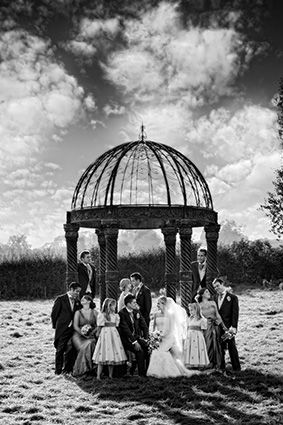
Thursday Thoughts with… Andrew Rodney

This is an historic day for CB, because our next guest here for the Thursday Thoughts series takes thing to a whole new level of quality information.  Our guest this week is none other than Andrew Rodney.  He has agreed to carve some time out of his already busy schedule to contribute to the series here.  Who is Andrew Rodney?  Andrew is a renowned instructor, NAPP Hall-of-Famer, published author (of Color Management for Photographers, Hands on Techniques for Photoshop Users), and well known contributing writer to several magazines including PDN, Publish, Photoshop User, Electronic Publishing, Digital Output, MacWeek, Digital Photo Pro and Professional Photographer.  He also regularly contributes to the forums of the NAPP community, and is considered by many to be one of the best around at color management and is a regular contributor for the Epson Print Academy.  (Which is coming to Denver in April too!)

CB:  Hi Andrew, and thanks so much for taking the time out of your schedule to participate in this.  I’ll get right to things…first with a few of the standard questions.  How long have you been a photographer?

AR:  I started as a kid. My dad gave me his camera, an Exakta VXIIa 35mm that at the time was pretty cool camera with interchangeable viewfinder. Plus it was a left-handed camera. Like many, my first experience in the B&W darkroom was one of amazement upon seeing ones first print come up before my eyes. I assisted a very good commercial photographer in LA in the early 1980s after which he kind of forced me to go to Art Center to get a degree in photography. I left the fall/winter of 1983 to work for the LAOOC who were staging the LA Olympics that summer. I got to shoot for them for 7 months, including the games themselves. It was my first introduction to sports photography and Fujichrome! I went back to Art Center, got a degree in 1988, shot locally doing mostly editorial and corporate/annual report work. Left LA in 1994 for Santa Fe and a new career that wasn’t income generated from shooting.

CB:  What kind of gear have you used over the course of your career?

AR:  From Exakta I went to Pentax, then Nikon, then Canon (as well as Hasselblad, Sinar). I shot with a lot of Kodak DCS cameras too, dating back to the original DCS-1. Now I’m using a 5D-MII, which I’m very impressed with. I’ve been lucky over the years to be able to shoot with a lot of digital capture devices I could never afford to buy. Betterlight scan backs, Leaf and Phase backs and so on.

CB:  So, you’ve clearly been shooting since the film era.  Did you have any particular favorite or are you still shooting with it?

AR:  I became a big fan of Fujichrome, despite its original reputation in 1984 when we were testing it for the Olympics (Fuji was a sponsor). Prior to that, I was a Kodachrome shooter. I can’t recall the last time I shot film that wasn’t for some Film vs. Digital test. I don’t miss film at all, sorry. I had to do a lot of scans in my time, like working all night in the darkroom, it gets weary after awhile.

CB:  I must say, testing film for use in the Olympics is sufficiently impressive!  How about your computer setup?  Do you prefer Macs, PC’s, Linux, or some other variant?

AR:  Mac, since 1988. In the old, old days, Photoshop only ran on a Mac!

CB:  Fair point…and now for the zany question of the day, Chocolate, Vanilla, or Strawberry?

AR:  Chocolate if forced to pick just one.

CB:  With all the sundry stuff out of the way, let’s move into an area with a little more granularity. Photographers often enjoy hearing helpful and constructive critiques of their work, as we are aware of how much we can grow from it.  However, we’ve also all had the “nice shot” and “cool” comments when we’ve shared our work.  What was the singular most useful critique or comment you’ve ever had on work you’ve shared publicly?

AR:  My god, that’s a though one! A great deal of the learning process at Art Center was the “crit”, from both instructor and fellow students. I think that total honesty with the understanding that much of this is subjective is key. That said, I spent two weeks on the Amazon River doing a photo tour with Jay Maisel who is one of the best instructors I’ve ever had. His approach to working with light, color and gesture is always in the back of my mind when shooting. If you ever have a chance to hear Jay speak, it could change the way you look at the world as a photographer. I don’t recall who first suggested that its critically important to scan your frame prior to capturing an image when time permits, really thinking about what’s in the frame and why its important to the image. Cropping after the fact is equally important because sometimes you really need to study the image after capture. Jay really reinforces the idea of ensuring everything in the cropped final is important to the total image. I really love Lightroom’s non-destructive cropping. It pays to revisit images you haven’t looked at in some time and seeing if indeed, the crop works or not.

CB:  Kind of makes me want to go back and look at some of my past images using Lightroom now!  What about giving critiques though?  If someone was asking you for an honest critique of their work, what 3 factors would you look at most (excluding friendships or family relatives, we’re talking professional or fellow photographer-types here)?

AR:  There’s that initial first look that either pulls me into the image or it doesn’t. Going back to Jay, I ask myself “is does this image say anything about light, color, gesture or more than one”? Second, I ask myself,  “Would I want to have this image on my wall, can I view it over and over again and see something new”? There are many images that I find successful that I might not want to view every day. Third, ask myself if I find the image successful due to the image or the presentation (which try to dismiss if possible). I’m seeing a trend these days with images that are printed really, really large because the size makes the image seem more important or more successful. But size doesn’t count; it doesn’t make a lesser image better.

CB:  Wow, I’d not thought of the impact that print or presentation size can have on how imagery is received, but that’s a great point!  Let’s move into something more software and technique oriented.  Being as well-versed as you are in color-management, you know that as Photoshop and other software programs mature and develop, new ways to create images are presenting wider options and possibilities. If you had to choose between the gear or the software as the only way to create, which would it be and why?

AR:  The gear. I’m finding less and less the need or desire to do work in Photoshop once I’ve used Lightroom, my modern digital “darkroom” to process the Raw images. I have to have software! The Raw (even the JPEG) is useless without a way to interpret what is nothing more then a big pile of zero’s and ones. The gear and latent film image, without a processor is equally inadequate. The software doesn’t create the image, so we have to rely on the photographer and some capture device. Some of the newer software is interesting in how it attempts to allow the user to produce some “looks”, like HDR that were not possible or darn difficult in the analog days. I find however that many prosumer photographers (if I can use that term), even some pro’s use software to mimic a “look” someone else has created and I think that’s usually a shame. I have to wonder if we really need plug-in’s that automatically make your image look like someone else’s style.

CB:  So, in looking at images you’ve captured with your gear, if you had to pick three pictures out of your entire portfolio to represent your approach to photography, or your artistic vision, which ones would you pick (feel free to share images here)?
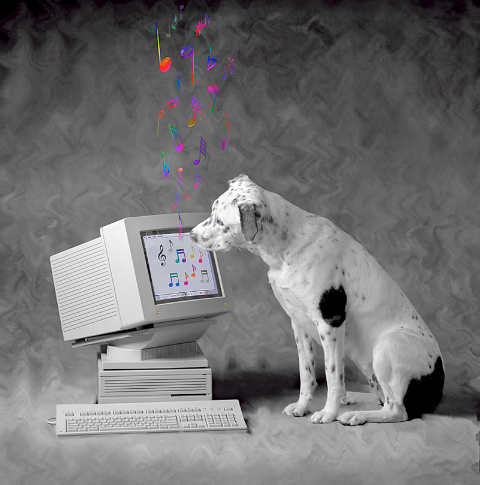
Tosh

The image called “Tosh” (Macintosh my dog at the time) that became my logo is near and dear to my heart and was one of a series of such images I did in the early Photoshop days (I started on version 1.0.7).
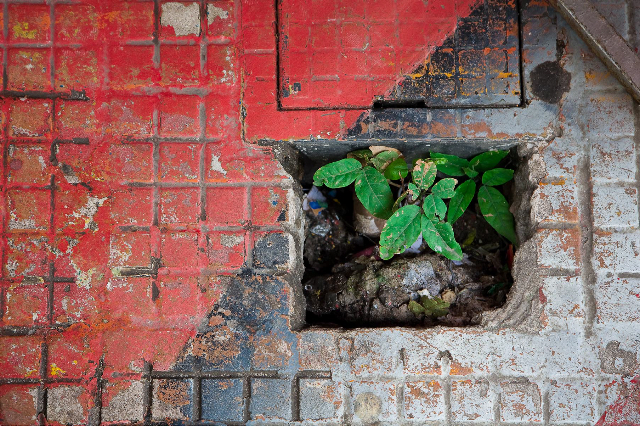
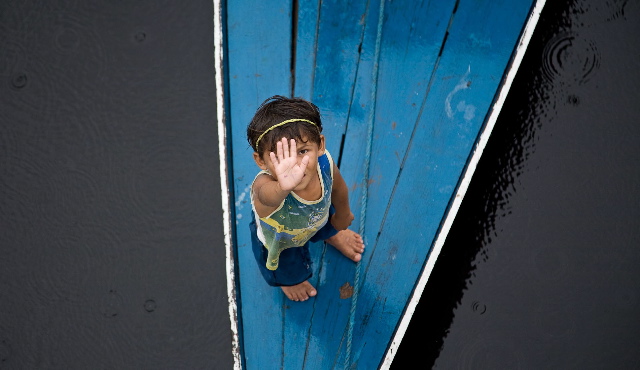
Digital Dog Photography

Digital Dog Photography

Two recent images from my trip with in 2007 were influenced by Jay (who I’ve known since I graduated from school). I’m uncomfortable with the term “artistic vision” although I do recognize that there’s some creativity involved in making (my) images.

CB:  These shots are fabulous, and it’s nice to learn a little background of your well-known image of “Tosh”!  Thanks so much for sharing these.  Any final thoughts you’d like to share about the state of photography or any catch phrases that you keep in mind when shooting?

AR:  I’m still so surprised that many users who are shooting Raw don’t realize that the LCD preview on their cameras and the histogram isn’t based on the Raw but the JPEG. And they don’t fully associate the differences in shooting for Raw versus JPEG in terms of proper exposure (Expose to the Right). As for catch phrases, I hate the term “accurate” color. You can’t define accurate without measuring the color and 99 times out of 100; measured color produces quite unattractive imagery on a display or output to a print. So when I shoot, I try to view the scene as I hope to express it on output, knowing neither the JPEG preview nor what I first see of the Raw data in my converter is going to be accurate to my memory vision of the scene. It’s still our job to render the print from what we “saw” when we captured the image or wish to visually express.

CB:  Let me say it for the record right here, that I did not know the histogram is based off the jpg and not the raw image.   As for the rest of your closing thoughts, you’ve definitely given me some food for thought, as well as the rest of the readership.  Andrew, again, thanks so much for taking the time to participate.  Have a great time at Photoshop World – I wish I could be there to take a class from you!

Well gang, that’s it for today.  There’s really nothing I can say to really “wrap things up” like I usually do.  You can find Andrew on the web at his website: Digital Dog, as well as through the NAPP forums.  There’s just tons of information on his website, including articles, links, ICC profile services, and much much more, and he is always very helpful to everyone in the NAPP forums!  Suffice to say, after hearing from Andrew, my own position on the learning curve just seemed to drop a little further.  Thanks so much to Andrew, and let’s hope we can take the insights he has shared with us here on the Thursday thoughts series and strive to make our own work better.  Happy shooting and we’ll see you back here tomorrow!
Wanna Get Lucky?

How many times have you seen a picture where it just made you say “WOW!  I wish I could capture something like that!”  And, you ask the person, “How’d you get that shot?”  Typically you’ll get an answer like “Just got lucky I guess.”  Well, I am not sure I buy into that.  Does luck really factor into taking good pictures?  Perhaps on rare occasions it does, because as the old saying goes, “Even a blind squirrel can find a nut occasionally”

But consistently taking good pictures requires more than luck.  It requires certain key elements that anyone can incorporate to increase their “keeper ratio”.  Today, I’ll look at 5 ways to increase your keepers.  So, here’s 5 ways to get lucky!

  1. Plan ahead.  Just the mere act of planning for a shot can help.  If you know you’re going to be in the mountains, take a wide angle lens with you.  If you know you’re going to be at a party, take that nifty fifty.  Wildlife?  Take a zoom!  Remember, prior planning not only prevents poor performance, but it also can help you take better pictures.
  2. Learn the technical stuff.  Know the technical stuff.  Memorize it.   There are certain fundamentals you just have to know, and by taking that sundry stuff and migrating it to a point where it’s in the back of your head and you don’t even have to think about it, then they can become tools.  If you understand apertures inside and out, then you can really use depth of field to create better pictures.  The same goes for planes of view, angles of view, composition rules, and all that other stuff.
  3. Take lots of pictures.  As the old saying goes, practice makes perfect.  So, stop reading forums, blogs, magazines, books, and all that stuff from time to time (except for my blog of course!), and get out there and practice, practice, practice!
  4. Look at the pictures of others.  Not only is appreciation of others work inspiring in its own right, but you can also train your eye to see what makes some images just “work”.
  5. Dedicate some time each day to do something related to photography.  It can be any of the above, from taking pictures, to editing pictures, looking at the works of others, studying your manual (learning about apertures, shutters, etc.), or any other photography-related ideas.  You can only improve your skills by repeated use.  Since I’ve referenced other idioms, another one could apply here:  If you don’t use it, you lose it.  Just like musicians who practice every day to get better, if you don’t practice your craft regularly, you won’t get better.

So, there you have it, 5 ways to improve your luck.  And this is just from my own perspective.  As is always the case when it comes to opinions, there are probably many more out there.  Got your own ideas about ways to “get lucky”?  Share them in the comments section or via email.  In the meantime, Happy Shooting – hope everyone can “get lucky”!

Multimedia Monday

With the “New and Improved” podcast starting out at PLM this week, there’s a couple exciting things to announce. First off, the drawing for the Think Tank Photo Streetwalker bag was done live on the podcast this week, and the winner was announced in the lead segment. Congrats go out to the winner (you know who you are!), so do get me your address so I can ship you the bag post haste!

The meat segment (aka middle segment) I talk about some new sources of inspiration – specifically the grocery store and in a restaurant. The next time you are at a restaurant, take your camera because the table makes for a great tripod, and you can get some really cool shots. Case in point, is the new gallery I have set up here at the blog, titled Tabletop Photography. I’m also sharing a few sources of inspiration from the grocery store too (tune in tomorrow for those).

The listener questions were really good ones from Meredith and Jason, where I take a look at the value of carbon fiber and the issue of when and where are we permitted to photograph. Last but not least, the photo tip of the week concerns copyright and registering your work, so make sure you stay tuned for that.

Lots of photo goodness to share, so make sure you tune in for the audio, and stop by the blog to pick up the link for the photo gallery. Photos, podcasts, and questions galore. Enjoy the day and we’ll see you back here tomorrow! Happy Shooting!
CB Equals PLM

newpodcast1

As previous posts have indicated, the time has been approaching where the podcast will be moving from being hosted here at CB over to Personal Life Media.  After some of the initial duplicating of audio posts from here over to PLM, the feed is nw prepped and ready for migration.  I’ll still have original copies of all podcasts, both video and audio here, but as we move forward, future audio podcasts will all be hosted by the folks over at PLM.  I’m looking forward to the partnership, and hopefully it will result in better quality both in podcasts and in blog posts for the listening and reading audience.

As the tentative schedule yesterday indicated, some initial podcasts (14 total) will be repeats, but starting next week, all-new content will be posted over at the new site.  You can bookmark it directly via your web browser or pick it up in iTunes at the new addresses below:

Via the web:  http://personallifemedia.com/podcasts/516-learning-digital-photography

Via iTunes: http://feeds.feedburner.com/Learning-Digital-Photography

I will continue to post content here on a regular basis, to inclue photos, articles, photographer interviews, product reviews, contests and all the content you have enjoyed for the past two years.   The days that podcasts come out though, the blog here will become the repository for show notes, so there will be some minor adjustments as I massage the schedule to accommodate those ends.  It looks like the podcast date will also shift once again to Monday for publication.  I think this makes 4 of the 5 days of the week where I have tried publishing, so we’ll see how it goes…  If things need to change again, I’ll be sure to keep everyone up to speed here on the blog.

So, that makes two maintenance and housekeeping posts in one week, but now that things are “official”, figured I’d better let everyone know to update their feeds accordingly – if you like the blog posts, then don’t change a thing.  If you like the podcasts, then update your feeds.  If you like both, then just change a little bit.  Regardless of whether it’s the blog, the podcast or both though – never forget to go out shooting!  (That’s what I’m doing tomorrow), so thanks to everyone for all the support and we’ll see you back here again tomorrow!

Another Magazine Article!

photobbmag

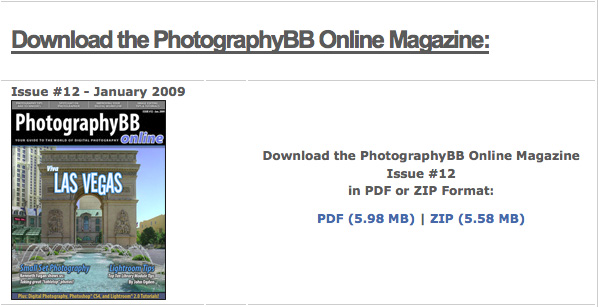
Well, I completely lost track of the week and did not get the weekly podcast recorded in time for publication today.  So, while I could have gone with the alliterative “Forgetful Friday” blog title, I figured that would have been a little too on the nose.  So, instead, I’ll share the exciting news that the latest issue of PhotographyBB magazine has been published.  Dave Seeram, editor-in-chief, announced it a few days ago on the website, so do stop over and download the latest article now. Make sure you take a peek at the article Photography Food for Thought (pgs 19-22), it was the contribution of yours truly to this months issue!  Of course the rest of the magazine is a worthwhile read too.  I particularly enjoyed Dave’s article on Photoshop Retouching.  He’s got a unique balance of technical expertise and translating that skill to the written word. Thanks go out to Dave and the entire publishing crew over at PhotographyBB for another opportunity to share an article with a wider audience than is here at CB!

That’s it for this week.  Happy shooting, have a great weekend, and we’ll see you back here Monday with the belated podcast!

Defining Your Image Composition

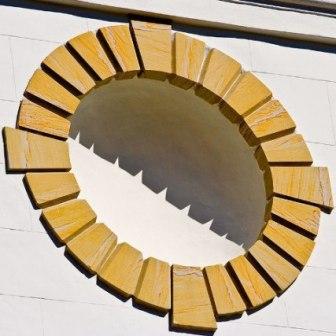
Composition in photography can have many origins.  You can take a pretty concrete subject and place it in an interesting environment.  The Rule of Thirds is one that is often used when creating photographic compositions.  Other times, the way that lines or curves within a scene are the compelling factor.  Architectural images use the idea of linear direction to compell the viewer.  Finally, the nature of light can also be a huge factor when composing an image.  After all, when looking at the word “photography”, it’s pretty clear how integral light can be to capturing your vision.  The Greek root “photos” literally means “light” (while “graphos” means to draw or paint – so photography really could be pretty succinctly defined as “painting with light”.)

So, we have three elements that can contribute to image composition:

  • Positioning your subject
  • Directing viewer via leading lines
  • Compelling the viewer via light

While there are no hard and fast rules in any form of artistic expression, these are three fundamentals that I try to keep in mind when capturing the world around me.  Sometimes I’ll find my images successfully utilizes only one of these elements.  Naturally, there are also times where two are executed well.  Naturally, I am luckiest though, is when all three are effectively brought into an image.

Here’s an example of what I am talking about.  Can you identify which elements of image composition are present?  Is there a defined subject that is well positioned?  What about compelling lines to define the image?  Finally, is there anything that draws your eye from the light or shadows?  Sound off in the comments, and let me know:

Brick Circle
Brick Circle

Unintended Inspiration

Today I thought I’d share a little “inspirational” series with the readership.  I had taken a break from reading blogs, magazines, news, twitter, forums, and all the other associated activities related to keeping current and learning about photography to actually put together to make some dinner.  Photography had exited my mind – I was taking a break, not even thinking about it.  So there I was, slicing and dicing, cutting celery, carrots, and onions for a spaghetti sauce, when BAM!  I saw some colors and shapes on the white cutting board and my knee jerk reaction was:  “Hey, that looks like one of those stock photos!  I wonder if I could make one like that!?”

Well, of course I had no equipment set up, no preparation, no lighting, no glycerine (it makes food shine), and had not given any thought to composition or anything like that.  But, having the 40D nearby, I figured what the heck, so began to document the process. First, I had the celery cut:

Celery

Then, I cut some carrots:

Celery and Carrots

Then, after some onions, it all went into a pot to brown in a butter sauce:

Veggies

After adding some ground pork and turkey, a little white wine and milk to steam down:

Steaming

Then once it had steamed down, the final stage, adding tomatoes:

Tomatos

The shots here are not all that great, but it does give a “back story” of sorts and helps to illustrate that sometimes you can find color and inspiration in the oddest of places – even if you’re not even looking for it.  So, if you ever find yourself stuck in a rut, trying to find some inspiration, sometimes it’s best to just stop trying so hard.  Forget about it and put your efforts into other things (like cooking).  Before you know it – you’l have new visions and challenges laid at your feet, waiting for your vision to bring it all together.  I’m sure others have experienced this too, so let’s hear it!  What other scenarios have produced unintended inspiration for you?  Feel free to share your stories, shots, and anecdotes in the comments!  Until tomorrow, Happy Shooting!

The Backstory of the Bridge

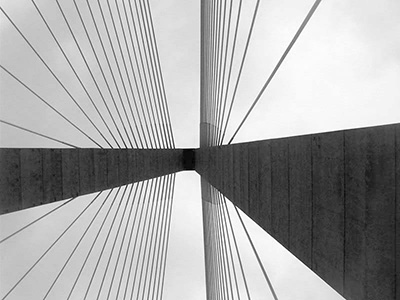
With what was probably a pretty evident “no-blog” Wednesday yesterday, and what appears to be a no-show for the Thursday Thoughts series this week, I decided to promote the Backstory for next week and share that with the reading audience today.  What makes this particular image unique is that this was taken in my pre-SLR era.  Just prior to entering the SLR market, I had a point and shoot Olympus and while it took pictures, the shutter speed wasn’t as responsive as I was looking for.  Nevertheless, it went with me pretty much everywhere.

My nephews were in town for a vacation a while back when we were still in South Carolina, and that visit happened to coincide with the grand opening of the Ravenel Bridge.  This was a HUGE project that took several years to complete, and the new bridge encompasses 10-12 lanes over the 2-lane bridge that previously spanned the Cooper River (coincidentally known as the Cooper River Bridge) that connected downtown Charleston, SC to all points west (Mt. Pleasant, Isle of Palms, and Myrtle Beach).  The economic benefits of increasing the traffic flow over 200% are astronomical.  As a part of the festivities, the weekend before the new bridge was to open – the general public was given an opportunity to walk across the bridge en masse – in the middle of the highway.  We decided the event would be a fun event for the boys, so off we went.  Amidst the increased the width of the new bridge, tens of thousands of people traversed the roadways over the weekend.  Having an opportunity to walk down the middle of that now insanely busy highway lent itself to photo opportunities that are rarely available afterward.  So, we trekked the 3-mile bridge on foot, and I took several pictures with the point-and-shoot camera.

Most were pretty blase as I was clearly very early on in my understanding of photographic composition, but a few did have a fun perspective.  At one point I actually found an opportunity to lie down in the middle of the road, and point the camera upward to the gray sky to capture this one:

The Bridge and the Backstory

I guess, as the old saying goes, even a blind squirrel can find a nut occasionally! 🙂

Happy shooting all, and we’ll see you back here again tomorrow!

The Show Must Go On…

While the folks at Personal Life Media continue to work behind the scenes at getting the show re-branded, I’ve been encouraged to keep producing podcasts so, this week, the podcast returns.  I have a couple fun segments including a more detailed back story from The Boneyard Beach post earlier this week, the Think Tank Photo Review, and some blog/podcast housekeeping including the inside scoop on how you can win the Streetwalker bag I reviewed!   Be sure to get this week’s episode so you know what to do.   The bag is valued at $140!!!

As you may have noticed if you’re picking up the feed, I am also uploading all the “What’s This” images to the Canon Blogger Flickr Pool.  As that content arc has ended, I thought it might be fun and of interest to see the entire gallery of photos that have gone up on that subject over a period of roughly 23 weeks.  (Almost half a year of images there to rack your brain on!)

As we head into the weekend, be sure to take your camera with you -never know when a photo opportunity will present itself, so as the Boy Scouts always said:  “Be Prepared!”  Happy shooting and we’ll see you back here Monday morning!