An Interview with Peggy Dyer…

As you may recall, a few weeks ago I had the pleasure of meeting up with Peggy Dyer, a professional photographer here in Colorado, and I got to learn about her latest project – One Million Faces.  We got a chance to sit down a second time and I learned a lot more about her creative energy, where she finds inspiration, and about where the One Million Faces project found it’s genesis.  In addition, we also got to talk in more detail about the Lensbaby series of lenses, starting with the first one ever,  going through the most recent Lensbaby Composer, and even a sneak peak of an upcoming lens from them.  Best of all – I actually was able to put together a video of it to share with the community.  It all looks very intriguing and with her creative energies, I am really getting motivated to get out there and try some shots with this gear.


An Interview with Peggy Dyer from CBJason on Vimeo.

A couple links from the interview, including some local charities and other resources that readers may find interesting are also included below:

Until tomorrow, Happy Shooting!

News, Artists, and Inspiration

Welcome to the show notes for week #17 of Learning Digital Photography.  Here’s the show notes for this week’s podcast…

First off, I’ve done some further tweaking to give a little more consistency and structure to the show for your listening pleasure.  The three segments that I am going to try to regularly stick to will be:

  1. News, Events, and Information from around the community and industry – here I’ll share nuggets, information, and other useful snippets from the most recent days and weeks of activity within the photography community.  Sometimes I’ll share information that’s available elsewhere, and other times I’ll offer my own perspectives on the news and events that shape the industry.
  2. Authors and Artists from within and related to the industry of photography are also an area I would like to devote some time to since the Thursday Thoughts series has not seen much attention lately (not that I am planning to either – I think it’s just on sabbatical!), and I had the good fortune of actually sitting down with an area professional recently which provided a source of inspiration for this weeks show.
  3. Sources of Inspiration – As artists I think we are always searching for and discovering new sources of inspiration.  Often these can come from well known venues such as photography magazines, galleries, and the like, but I am not adverse to featuring unusual or new sources either.  This week, I will be featuring an unusual source of inspiration, so make sure you stop in for this segment too!

To find out why these links are all up and on the blog, make sure to stop over to Personal Life Media and grab this weeks show! For the link grabbers, here you are:

That’s it for today all! Enjoy the show, and we’ll see you back here bright and early tomorrow (well, maybe not so early, as I still have an on-going problem with the sandman! LOL) Happy shooting!

P.S. I am still including a copy of the show locally, so you can grab it from here if you like too. Don’t forget, we still have a poll going on re: Twitter and Blogging, so if you’ve not voted yet, vote here!

[display_podcast]

Is 12 enough?

An interesting news story came my way today over on CNet where Akira Watanabe, manager of Olympus Imaging’s SLR planning department said that most needs of most people can be met with a 12MP camera.  The full story is here, but does bring what has been an ongoing discussion into a more defined state.  As we’ve seen megapixel counts increase from counts lower than 3 MP less than a decade ago to counts that now are at 12 MP or higher, discussions have arisen throughout the industry on “How much is enough?”

From my perspective, I would agree that 12 is probably close.  Yes, processing capabilities are increasing and hard drive storage space costs continue to decrease at almost ridiculous rates (you can get a 1TB hard drive for around $100 these days!), but these are mitigated by need.  When you look at the true and honest need for most folks (myself included), we do not regularly print much larger than 8×10, or 12×16.  I would venture to guess that even artist gallery prints and portfolios do not exceed 16×20″ dimensions that often.

Yes, more megapixels means you can crop smaller and retain print quality, but at what price?  More grain or noise?  Yep.  Reduced dynamic range?  Yep.  More processing demands?  Yep.  More storage needed?  Yep.  While all of these can be addressed by buying software to handle noise, bracketing exposures to increase dynamic range, and buying more storage to meet the increased demand, there does come a point of diminishing returns on the investment, and Olympus seems to have set that mark at 12 MP.

But, will the market agree?  I think so.  It’s no secret that the economy is not doing so well.  People are likely going to be more frugal in their purchases, and getting that full-sized wall print may not be as high a priority as, perhaps, bread on the table is anymore.  Do we need to re-assess our priorities?  Some say yes, that it’s not all about the megapixels.  Some say we should be asking for things like low light responsiveness, better auto-focusing, faster auto-focusing, better in camera noise handling.  I don’t think any of us would complain either if we saw a decrease in the costs of fast glass.

But who knows – maybe the masses will continue to push for more megapixels.  Now that Olympus has drawn a proverbial line in the sane, will other vendors see the logic and start to taper things off?  Or will the megapixels wars continue indefinitely?  Sure, we can’t predict the future, but guessing and talking about it can be a good source of discussion too because it can get us thinking about what is important in our pictures.  So, what do you think?  Where will things go from here?  Sound off in the comments, and watch for the podcast coming up on Monday where you’ll get an extended version of my thoughts on where things may go from here.

In the meantime, have a great weekend, and go out and getcha some (pictures)!  We’ll see you back here on Monday!

Go soak your gear!

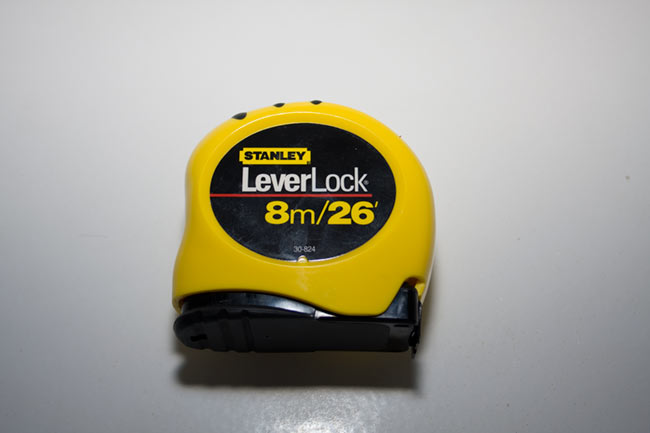
It pays to review your web traffic periodically because I just learned a way that your bathtub can be used for photography!  Not only is it a good place to mellow out after a stressful shoot, but it also makes a heckuva softbox!  I was on a forum that had referenced the blog and a guy had some product that he placed in his tub.  I thought it was an interesting idea, and decided to give it a try.  As it turns out, the tub is a great place to put your gear!  Granted, not to soak it (sorry, but I had to tease the title that way), but to act as a great background and softbox combined in one.

Here’s a few sample shots.  For all the tech-types, these are pretty much straight out of camera (or sooc) – all I did was adjust the WB for Flash and adjust the ACR sharpening from 25 to 75.  All are resized to 650px wide for the blog.  Here’s the setup:  I took the Canon kit lens (18-55) on my 40D, threw on the 550EX, and set everything to default values.  Shutter at standard sync speed of 250, aperture at f8 and ISO at 100.  I powered the 550EX at it’s standard setting, on camera (relax strobists – I can hear you shuddering from here),  and started firing a few shots.  I pointed the flash to camera right and got this:

ruler1

Yup, that’s a God-awful shot, with a nasty shadow.  Perhaps I could ditch the shadow.  Since we’re not exactly using conventional wisdom here, let’s try it with the flash pointed straight at the subject:

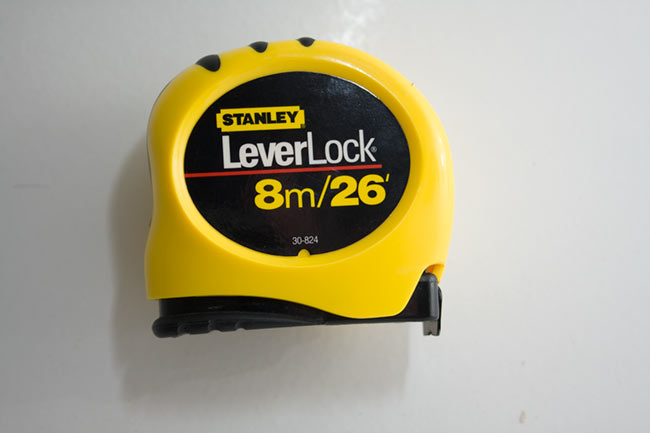
ruler2

Hey!  That’s actually not too bad.  It’s not that great, and still definitely a “Meh” kind of shot as it’s still got something of a shadow.  So, I spun the flash to fire above me and bounce off the ceiling:

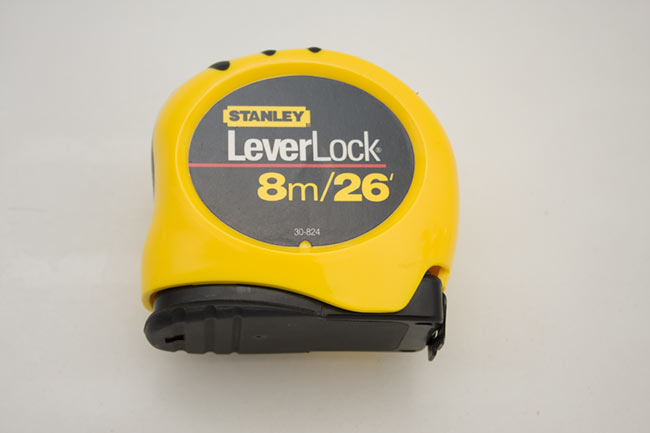
ruler3

Voila!  You know what?  For being a spur of the moment thing, and without a lot of pre-planning or preparation, that’s not bad at all.  And, it was shot in a bathtub!  Anyone else out there have a bathtub?  Try some shots in it for different items.  I used a tape measure, but what about a pen, or a microphone, or a printer, or even a lens?  I bet you could get some pretty cool results with very little setup!  Anyone else have some odd or unusual ways to get clean backgrounds and even lighting on the cheap?  Feel free to share your thoughts, ideas, and feedback in the comments.  Feel free to link your own efforts there too!  Happy shooting all and we’ll see you back here again tomorrow!

Great Green Gobs of Grapes!

This week has been a particularly creatively filled one here on the blog:

  • Monday I shared the HDR image workup from last weekend and published the weekly podcast
  • Tuesday had another shot showcasing the benefits of looking all around for ideas (including behind you!)
  • Wednesday was the more detailed explanation of the Lensbaby Composer and selective focus

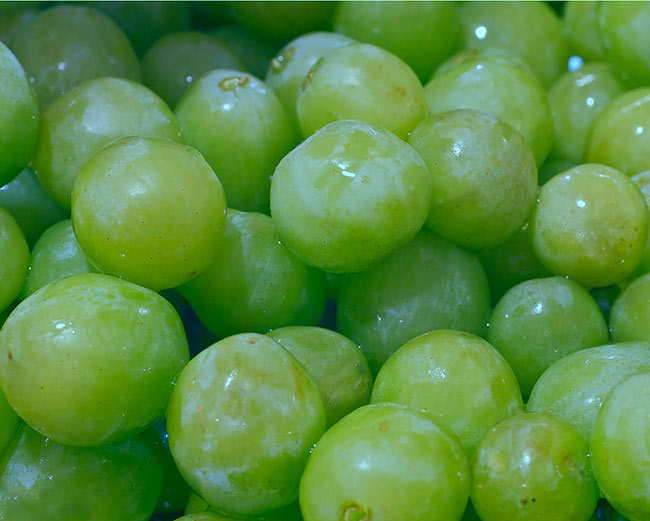
And now today, another source of inspiration from the kitchen!  I was cleaning some grapes for lunches and was struck not only by their size (these things were huge!), but also by the cool way the light in the kitchen was bouncing off each grape in the colander.  It helped that the colander is stainless steel and reflected some nice green tones back onto the grapes themselves, making them look even greener.  On instinct, I took a few, and here’s the best of it (and although it was taken with a 70mm Macro, this was not taken from macro range – that should tell you the size of these guys):

Grapes Galore!

Not too shabby for a “spur of the moment” capture.  Nothing like what you’ll see over at Mike Palmer’s blog (he does a lot of cool shallow dof work with food photography, and is a friend-of-the-blog), but a step in the direction of creativity anyway!  Catch an cool colors in your kitchen lately?  Share your thoughts, perspectives, links to other images, ideas and feedback in the comments section!  Keep on shootin’ and we’ll see you back here for the Friday post!

Look out behind you!

We’re always looking forward, upward and downward to find a unique perspective or angle on things – to create something unique and interesting.  Well, today, I’ve got an example of how sometimes the interesting shots are behind you!  In this particular case, it’s doubly true.

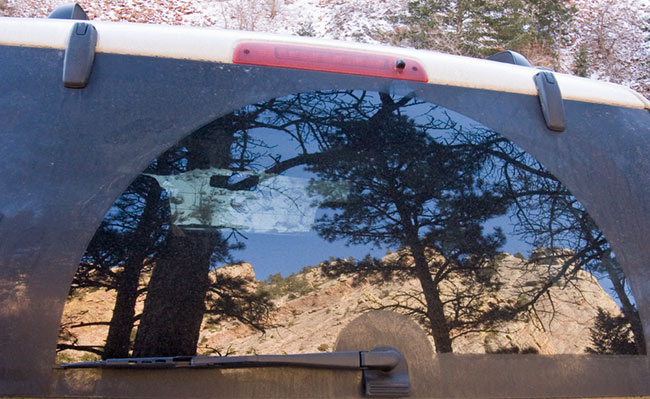
This is also from the photo walk out in El Dorado from last weekend, and what makes it doubly true is because we were out looking to capture the beuaty of the mountains, the trees, and the amazing Colorado skies.  At one waypoint between hiking trails, we took a rest stop and used some of the provided *ahem* facilities.  On returning to the vehicle, I saw this reflection in the rear window of the Expedition:

Rear View

So, the view was created from the back window reflection, and I only caught it by turning my eyes away from the mountains, landscapes, and opportunities in front of me!  When’s the last time you turned 180 degrees to get a shot?  Got any fun stories of when it did?  Share them in the comments!

Don’t forget to stop over and pick up the new feed in iTunes for the podcast and share your thoughts about the new show format!  Here’s the link:  iTunes feed Happy shooting all and we’ll see you back here tomorrow!

HDR, Web links, and a podcast!

fissure2

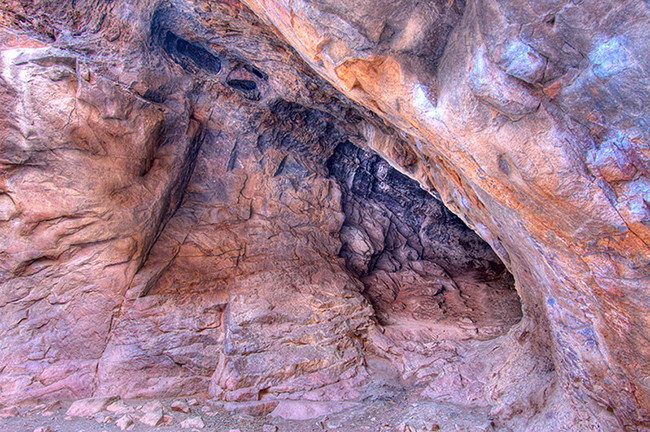
So, this last weekend I went on the photo meetup group outing for the month of February into Eldorado State Park, south of Boulder, and had many an opportunity to capture some landscape and macro work. Some great views were had and I only hope that they all come out as well as this one did. While hiking up a trail of slippery snow and ice (it was cold out Saturday morning), I saw this fissure that was pretty intense looking because it was only partially lit. I thought about it for a second and decided to bracket some exposures to see if it would turn out with some HDR massaging. Not only did it turn out better than I would have thought, I was also very pleased with how Photomatix did with this. I would highly recommend this software to anyone interested in HDR work. Not only is it more intuitive than Photoshop, the results were much more gratifying! You can buy Photomatix for PS, Lightroom and for either Windows or a Mac over at www.HDRsoft.com.

Some other web links I learned about recently also include www.fotoblur.com and www.usefilm.com Both are much more cognizant and respective of photography copyright than other social and photo networking sites like Flickr and Facebook (we all know about the Facebook Terms of Service fiasco, right?). One thing I like about both Fotoblur and Flickr is that you are limited in how many images you can upload daily. This requires you to be more careful about what you publish, and as a result, you are more thoughtful and objective of what work is worth posting and sharing online.

Last but not least, the podcast that I had intended to put out last week was delayed for a few days as I put the finishing touches up on a home improvement project. (We finished out one of the basement rooms – expect to see some photos on that makeover forthcoming!) The good news is that not only is the basement room on the verge of completion, but that the podcast is up for this week. Naturally, the title of the podcast will match the blog post title, as the show notes follow closely to todays content. Stop on over to Personal Life Media for the show, or pick it up in iTunes! (Don’t forget to leave your thoughts in the review section of iTunes too…the more the merrier!)

Until tomorrow, when I’ll have some more HDR shots to share, keep on shooting – hope all your shots are good ones!

Can ordinary be interesting?

A while back I took Tracy out for an afternon/evening in Denver.  I agreed to leave my camera behind, but in case she wanted to catch a moment for posterity’s sake, I grabbed the P&S one she asked for as a Christmas gift.  After her initial interest waned in taking pictures, I ended up with the camera in hand (go figure) and even shared a few here on the blog (remember the bottle caps in the grocery?).  Anyway, it got me to thinking about how to take ordinary scenes and make them interesting.  I guess that’s part of the role of being a photographer:  making the ordinary extraordinary.

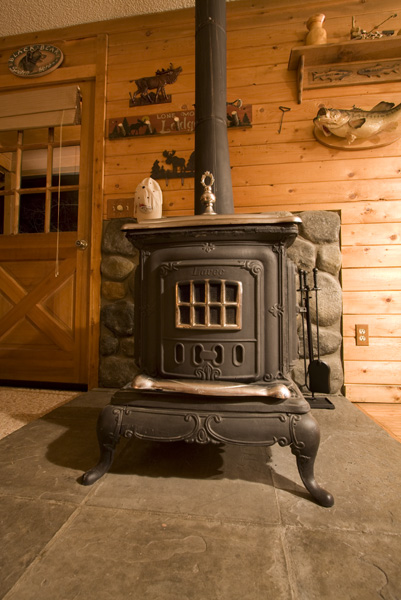
We do see the world differently than others, and by capturing our vision, and then sharing it with the world with our particular expression, otherwise ordinary scenes can be seen in a new and different light.  With that idea in mind, here’s one I captured recently (with my own camera) that kind of spoke to me in that way:

_mg_8521

What made this unique for me was the ambient light.  No gels, no lighting tricks or anything – it was on our weekend getaway, and since not very many places outside of mountain cabins have things like wood stoves, the idea hit me to catch this scene.  What makes it (for me) is the fact that the ambient light is very “fireside”.  The tungsten light combined with the sun setting behind the trees outside made this a perfect scene.  So, up went the tripod, the shutter went long, and I kept the aperture up, and noise down.  (5 seconds, f10, and ISO 100 for the techies in the crowd).

I think it worked, but would like to hear from the readers out there.  Does this work?  Can ordinary scenes be made extraordinary?  What about the role a photographer has?  Is there really a “symbolic” or larger purpose for people who enjoy taking pictures?  What do you enjoy about photography?  Feel free to sound off in the comments, as there are no wrong answers here…

In the meantime, happy shooting and we’ll see you back here Friday!

The Power of Action

Until this last weekend, I had very limited experience with astrophotography.  The concepts and techniques of the field are well documented, and I have read several articles on the subject.  What this last weekend demonstrated to me, (and what I often tell everyone who reads this blog), is that there is no better way to learn something than to just get out and do it!  This is the power of action!

Over the course of a pleasantly long weekend with my wife, we had an opportunity to view an absolutely breath-taking night sky, without the pollution of light interference.  The pure darkness of the mountains, coupled with the lack of urban and suburban sprawl, revealed the brilliance of the night skies to me.  As I shared the moment with Tracy, a part of me finally caved and said “Sorry, but I’ve got to take a picture of this!”  Admitting defeat as a camera widow, she went inside, and I tried to recall the articles with their knowledge:

  • Tripod (critical for stability!)
  • Shoot wide (calls for fewer adjustments during long exposures which also means longer shutter speed allowances)
  • Shutter release (never release the shutter manually on such scenes – increases too much vibration)
  • In camera noise reduction…(long exposures tend to create noise as a consequence)
  • Higher aperture (for greater depth of field)
  • And then there was something about the shutter speed…no more than…what?  I could not for the life of me remember!

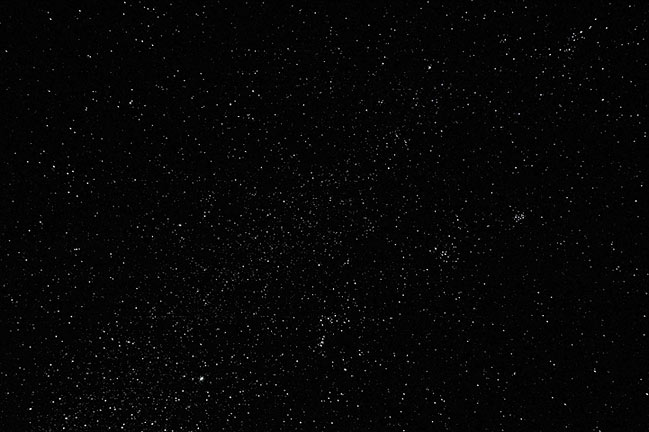
So, with the digital mantra in place, I tried many different exposures.  My first attempt was a 30 second exposure at f8.0 and ISO 100.  The on-screen results were not that great.  So, I took things to the extremeon my next shot, 30 second exposure, f8.0 and ISO 3200.  The result:  I saw stars on screen!  Excited at the prospect ofcapturing the scene, I promptly returned to the secluded getaway mentality, forgetting the cardinal rule of digital:  to shoot many, many shots, and at many, many settings.

What I also forgot is that in astrophotography there are more than the above considerations to take into account.  After getting home and realizing my blunder, I re-read the articles and remembered that as a general rule, ISO should never go above 800, and because the earth is always moving, you should never shoot an exposure longer than 5-10 seconds, because stars will blur by then.  (As was evidenced during post processing…)

So, the result was nothing too rewarding.  Certainly nothing that will get me fame in fortune in National Geographic or anything like that.  I did manage to massage something close to what we saw with some post work (including some serious Noise Ninja assistance, drastic curves adjustments, the glowing edges filter, and a little black and white conversion, just for starters…
Night Skies

While the end result is “not too shabby”, it certainly is nothing like these stellar (literally and figuratively) shots from Astropix.com I must admit that I am now considering adding to my gear collection, and that I need to refresh on the techniques of astro-photography, the best method for learning is to simply get out and shoot.  Want to capture the light?  Then here’s teh call to action, because it is, after all, the only way to capture the world around you in images!

For those interested in learning more about astro-photography, here’s a couple resources I’ve got in my bookmarks (how I wish I had my computer with me at the time!):

If anyone has their own links, resources, tips, tricks, suggestions, and ideas for astrophotography, feel free to share them in the comments.  In the meantime, thanks for stopping in and we’ll see you back here again tomorrow.

Let Me Count the Ways…

A Hallmark Holiday will be upon us tomorrow here in the U.S.  The flower, chocolate, and teddy bear industries probably generate at least half (if not more) of their annual revenue from this weekend alone.   As a photographer, you can take advantage of this in many ways (that’s right, there’s photo ops here too!)

Here’s a couple ideas for photo ops this weekend:

  • Flowers are always great for photos – get that macro lens out, and capture the detail of the petals.
  • Red, pink, blush, browns of chocolate, and much much more – lots of colors.  Throw your lens to manual and go deliberately out of focus for some great abstracts!
  • Taking your significant other some place special?  The views are likely appealing, so make sure you take a camera with you (even if it’s a compact). Sunset dinners (sunsets are great photo ops,  in my opinion, no matter how many times they’ve been captured already because each one is different!) provide venues too.  Near water?  Nothing better for reflections!
  • Valentine’s Portraits – lots of people become enamored enough to propose during this weekend – seize the day and offer couple’s portraits for the happy pair!

These are just a few ways to take advantage of the holiday.  Ahh, Valentine’s Day – how do I love thee?  Let me count the ways.  How many ways can you think of to capture the day?  Share your ideas in the comments section.  In the meantime, Happy Valentine’s Day a little early.  Try not to think of today as Friday the 13th – instead think of it as the day before Valentine’s Day!  Happy Shooting and we’ll see you back here Monday.