I can’t tell you the number of times I’ve gone to print pictures I’ve taken only to find that I had composed it in a way that a portion of the image was lost when printed because it had to be cropped out to fit on the paper. Today I am going to share a technique in Photoshop that will help you get around that pesky limitation.
First a little background – the reason why we are losing part of the picture is because we are changing the aspect ratio. What is aspect ratio? Simply enough, it’s the relative size of the long side of the picture to the short side. Aspect ratios are often referred to by their lowest common factor. So, a 4×6 print uses a 3:2 aspect ratio. (Aspect ratios usually are stated with the larger of the numbers coming first…) An 8×10 has an aspect ratio of 5:4. Want to print a 16×20? Guess what – it’s got an aspect ratio of 5:4 too! Here are some of the most common aspect ratios that you see in photography:
4:3 – Point and Shoot Cameras
3:2 – 35mm Film cameras and most APS-C sensor cameras (SLR’s)
1.81:1 – APS-H Mode (High Def)
3:1 – APS-P (Panoramic)
So, with an SLR camera, since your sensor approximates an aspect ratio of 3:2, getting an 8×10 print means you need to keep your subject matter in from the edges because when you crop to the new ratio, at least one of those edges (and a little of the other) will be lost from the crop. So, having now explained “why”, let’s now look at the “how” (as in how to fix it!) in the delayed tutorial for the week:
We’ve been looking at the Rule of Thirds in photography for compositional approaches, and I commented on what seems to be a trend toward the former being more popular in portrait work and the latter being more popular in landscape type work. The idea makes sense as portraits have subjects within the picture, while with landscapes the subject IS the picture (the entire scene). Click here for the full blog post with examples.
Well, today, I am taking advantage of the open sourced nature of Wikipedia (all images link back to the Wikipedia pages they came from) for some well-known works of art that have survived the test of time to see how they measure up under the Rule of Thirds. The results are kind of interesting:
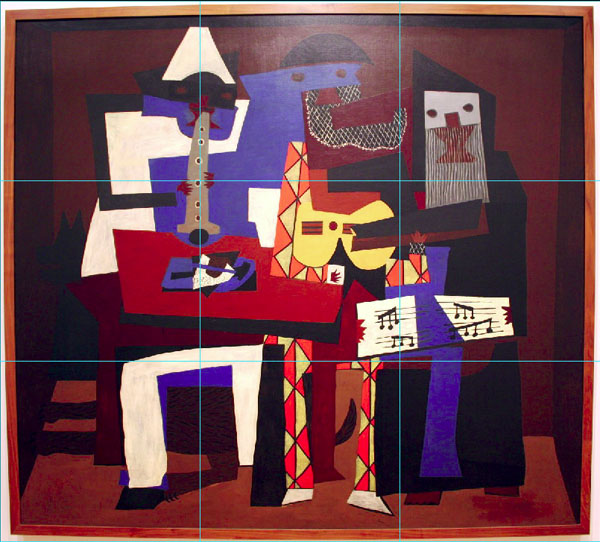
The first is from Picasso, from his Cubism work, titled Three Musicians…
A super-imposed Rule of Thirds grid is rather telling. While this construct is somewhat different, because of the style of Cubism, I found it interesting to see the lines that he painted also fell into roughly the same places as those of the Rule of Thirds. And the hot point in the upper left is kind of close to the “face” of one of the musicians. Does the rule of Thirds apply here? Given the linear composition, my vote is Yes – what’s yours?
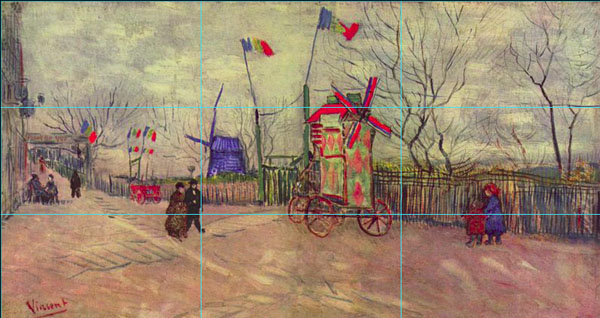
Next up, is Van Gogh, with a painting titled “Street Scene in the Montmartre”:
Here, hot points are very much at play, with the people walking down the street, coming in at the lower left hot point, and the red splash of color on the windmill is very close to the upper right point. The fence line also roughly follows the lower third so elements of both compositional styles are present here. Does the Rule of Thirds apply here? I’d say yes! Do you agree?
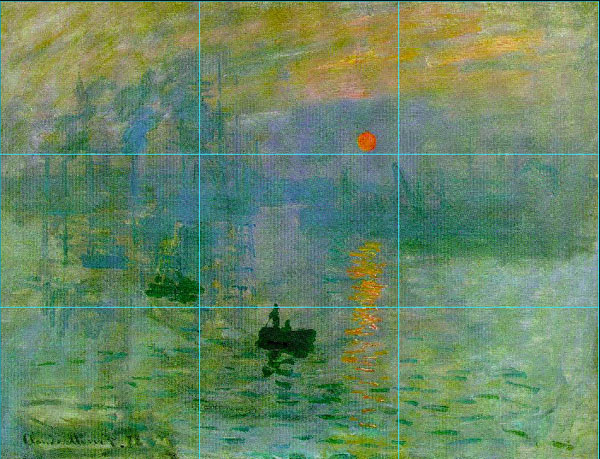
Lastly, let’s take a look at one of the more abstract artists in history: Monet, and one of my favorite works of his, “Impression, Sunrise”…
The sun – pretty close to the upper right hot spot, and teh reflection in the impressionist waters, almost as in line with the right third line. The boater shadow, being an opposing color, stands out anyway, but it also helps the composition that the lower third intersects it to a degree. Remember, art is not an exact science, and creativity wouldn’t have variation if subjects were always right on the hotspot. Equally, it wouldn’t spark or inspire us to always place things on the thirds lines. These are guides, meant to help you compose in aesthetically pleasing and appealing ways. Does the Rule of Thirds apply here? Without a doubt, is my answer! Am I wrong? What’s your take?
These are but three single instances of works of art that have survived the test of time. There is so much history to art and its creative appeal, but I would venture to guess that much of it has some elemetns of composition in common throughout the ages. Yet, there will always be exceptions. That is the challenge for today – do you know any famous works of art historically that break the rules? What makes them work and why? Share your comments here in the blog.
A few other tidbits to share today outside of the main focal point (get it? 🙂 ):
Three more days to the Worldwide Photowalk, hosted by Scott Kelby and with tons of sponsors and prizes. Have you registered? Some cities still have openings so check cities near you – there’s still time to register! (It’s free!)
A fellow NAPP member had started a community forum thread asking about the graphics tablet pen as a useful tool, and Dave Cross stopped in to share that he made a blog post scheduled for yesterday. I made a mental note to stop over and read it – great thoughts, and definitely worth the 30 seconds (I read his blog daily anyway)!
Last, but not least, I got an email recently about this new site where photographers of any background can upload images of their lighting setups or other creative perspectives and setups with light to share with the community at large. It’s a great outlet and you can get some pretty incredible inspiration from it…the name is Light Test and coincidentally, so is the web address. Check them out here.
As a final note today, as I always like to share sources of creativity, I’d like to give some special thanks to Elizabeth Gast (a.k.a. Firgs), of Design by Firgs. She has been instrumental in helping me think outside my own box of creative limits, and in working hard to improve both the quality of work and how I present that work. Today, she featured me on her site as a “Hot Site!”. While I am always going to take the self-deprecating approach, here I must simply and humbly say thanks to her. Not only for the mention on her site today, but also for her instrumental help in helping me improve my own web presence with regard to branding and design styles (see my Twitter background for an example).
That’s enough for one day, doncha think? Happy shooting and we’ll see you back here again tomorrow.
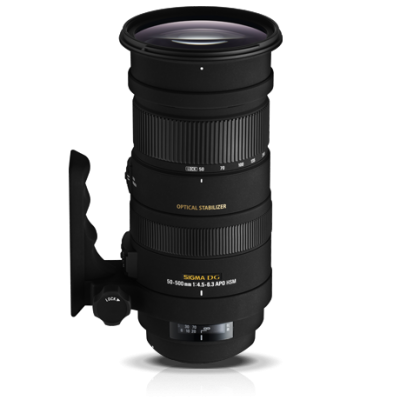
A while back I teased about a forthcoming lens review (nearly 3 months ago actually, in the Teaser Alert), and after several project shoots, the holidays, and scheduling delays, I am finally getting my act together to bring you the latest gear review…that of the Sigma 50-500mm. As a word of caution, you should be forewarned that the Sigma line-up of lenses that I have reviewed has become quite extensive. Right away this should tell you two things:
Sigma has been quite generous with me in terms of making a variety of lenses available. They likely are doing this for a number of reasons, but primarily because they know that I will give a fair, honest, and 9 times of out 10, a positive review of their equipment.
I like Sigma lenses! It should be no secret by now that I do like their lenses. They are optically on par with what one would expect from lens manufacturers by todays standards. Heck, sometimes I think the optical quality even exceeds that of the main brands out there (of course here I mean Canon and Nikon). The price is almost always right on – sometimes the price tag is a little high for my taste, but the advantage that Sigma has is that they are what is considered a “third party lens”, and because of that designation, their pricing is a notch below comparable lenses made by either Canon or Nikon for equivalent glass.
So, when Sigma came calling (actually I called Sigma), with the 50-500, the game face was put on. Right off the bat, here Sigma has been more than generous because I have now had this lens in my possession for nearly 3 months! I’ve posted a few photos from this lens over the past three months, so you may see some repeated images here, but they serve the purpose of demonstrating the various settings that I have used to shoot and test this glass. Having set the stage, let’s get started with the review. In the past, I’ve talked about things in terms of Pros and Cons, listing first the things I like, then the things I was not as much a fan of. While it has worked to a degree, I am trying to make things more uniform in the review section, so will start adhering to some more concise points and then indicating whether it is a pro or a con. Ladies and gentlemen, I give you the
Sigma 50-500mm f4.5-6.3 Review
1. Focal Range: The focal range is how lenses are most commonly identified, and this is the measure of how much “zoom” there is in the lens. Here, the description says it all. This lens ranges from a widest point of 50mm to an impressive “zoom” of 500mm. On a crop sensor camera, that means you are looking at a range of 80 to 800mm! By any standard, this is a pretty wide range, encompassing a difference of nearly 700mm in focal adjustments. I am going to call this one a Pro.
2. F-Stop Range: The f-stop range is the measure of the minimum (or maximum depending on your way of thinking) aperture the lens can handle at various lengths. When dealing with a zoom lens, as you move further out, the elements have to compensate for the change in the length by increasing the size of the opening of the aperture, so you will see adjustments as the lens “zoom” increases. The Sigma 50-500mm is dialed in to a minimum aperture opening of f4.5 to f6.3. So, at the widest zoom of 50mm, the lowest aperture setting you can get is f4.5. Likewise, if you zoom this all the way out to 500, the minimum aperture is f6.3. So, don’t be misled by the numbers, shooting this lens at 500mm will not afford you the f4.5 that is capable at the widest setting any more than the f2.8 is available on a 70-200 at the longest zoom. When you have zoom lenses, there is a compromise in aperture capabilities that must be met when zooming out, and such is the case here. I did some experimenting at various focal lengths, and here are some apparent limits at different zooms:
Focal Length
Minimum Aperture
50mm
f 4.5
70mm
f 5.0
100mm
f 5.0
135mm
f 5.6
200mm
f 5.6
250mm
f 6.3
300mm
f 6.3
400mm
f 6.3
500mm
f 6.3
Given the technology of aperture limitations in zooms, I would say that the Sigma is on par with what the expectations would be for this range. To build this lens for any lower aperture settings would make the lens both heavier and longer. I don’t even want to think about what it would do to the price either! It’s not the greatest in aperture abilities, but it’s no slouch either. I’m going to have to thrown an “Even” flag on this.
3. Noise: I brought in the noise consideration based on my first Sigma lens I ever purchased, the 70mm Macro (f2.8) which did not have HSM. The inclusion of HSM in almost every lens since has been a Godsend. This holds true for the 50-500mm as well. It’s super quiet and has convinced me that I will never stray off the Hyper Sonic Motor (or USM on Canon glass, ever gain! ‘Nuff said. Pro
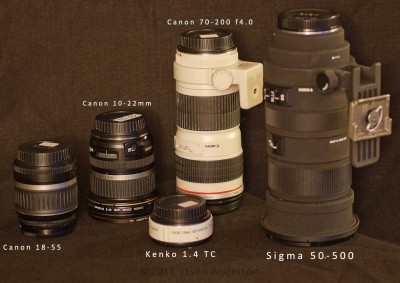
4. Size/Weight: My last big lens I reviewed here was the 18-250. It was a respectable weight, but this is by far the heaviest lens I’ve ever tested. Weighing in at a shade upder 4.5 lbs (that’s 1970 grams for you Metric folks), it can cause some serious arm strain after extensive shooting. I would recommend using either a monopod or a tripod for this lens whenever possible. It also bears mentioning here that due to the weight of the lens, you want to support it in the provided collar. Supporting the rig by the camera can result in some serious shear force, which can rip the lens right off the camera. Other size considerations involve the length of the lens both fully closed and fully extended. This will draw some eyes at either end…whether it be the short side (8.5″) or the long side (12″)! Here’s a comparison shot with it next to several other lenses so you can get an idea of its relative size:
Another consideration to take into account about this size is the filter required. For those interested in using the ND filters to protect front elements, you will need a 95mm filter to cover this – not a cheap thing to purchase by any means. Ultimately the size/weight considerations really will depend on your personal ability to handle it effectively. For me, most of the time it was not a factor, so I’ll acquiesce and call it a Pro.
5. Build Quality: In line with expectations, the Sigma quality showed here. Their now easily recognizable textured exterior exudes professionalism, and just feels good in your hands. Given the weight of the lens, you don’t want to hold this gingerly, but at the same time, if the body took a slight bump from another lens in your bag, the “other lens” would likely bear the brunt of it. No questions here. It’s a Pro.
6. OS/IS/VR: Due to the limited aperture range, and the weight, the presence of OS is invaluable. Using the OS allows you to keep your aperture value low, allowing for bother faster manipulation and shorter shutter speeds, as well as some nice bokeh in the background when your distances are good. What was extra nice about this is the ability to toggle between the vertical and horizontal planes to control vibration in different circumstances. When I was on a monopod, I switched to OS 2 to help control vertical (or up and down) vibration. When shooting handheld, I was on OS 1 most of the time, under the premise that my own face, body and camera holding helped to minimize the vertical and thus needed more help with horizontal. When I was on a tripod, I turned it off per normal procedures for when using OS/IS/VR. In my book, having versus not having OS/IS/VR is definitely a Pro.
7. Cost: The average retail market for this lens is approximately $1500. Given the focal range, the aperture range, and other considerations thus far, it seems to be pretty competitive. The Canon lens with the longest zoom range is their 100-400 and that factors in at $1800. Nikonians can salivate over their 80-400 for $1850. Both price in over the Sigma lens, and it still gives an extra 110-150mm of variable range. For my own personal budget, that’s a tougher call because while I would love to own this lens – I would have to sell something else to do so, and am not sure I want to dispose of anything else in my camera bag at the moment…the jury is out on this for me personally, but for those interested in purchasing any time soon: Pro
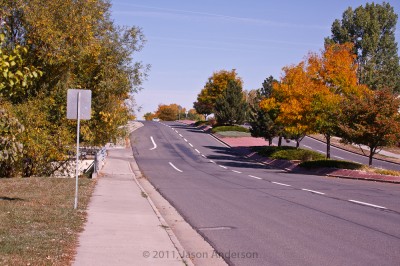
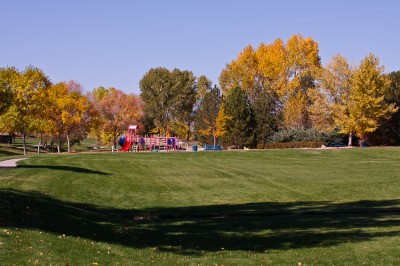
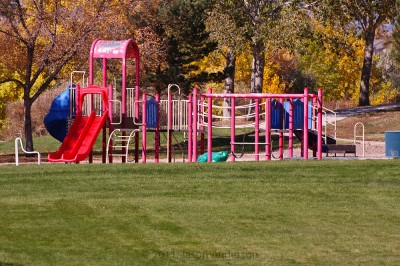
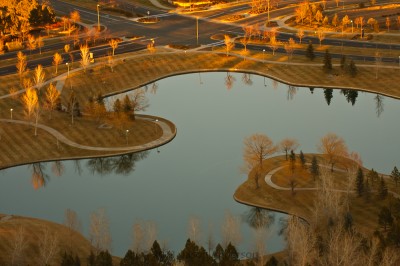
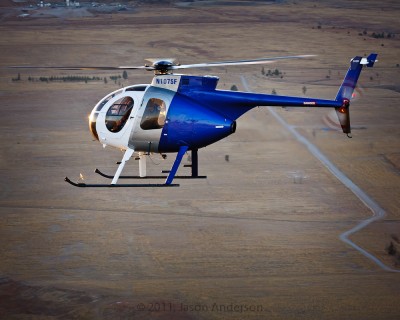
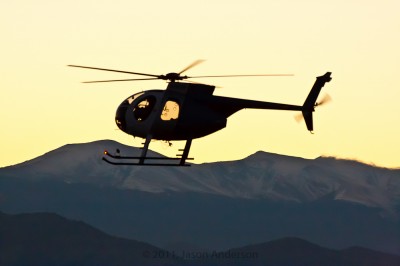
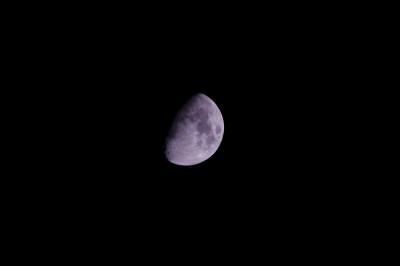
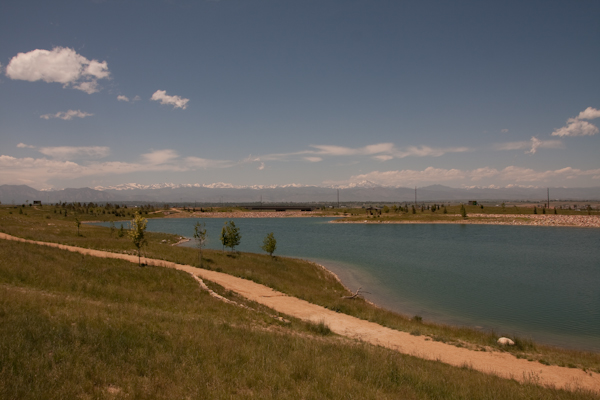
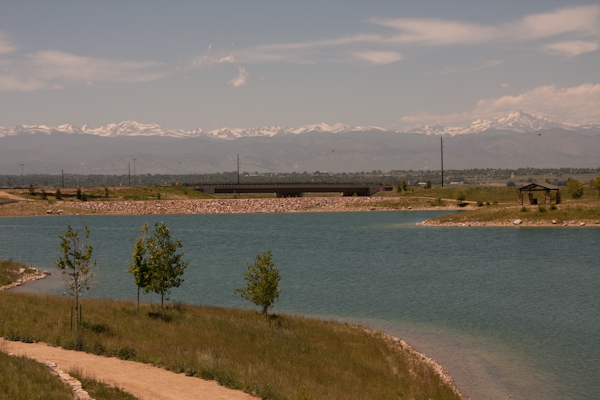
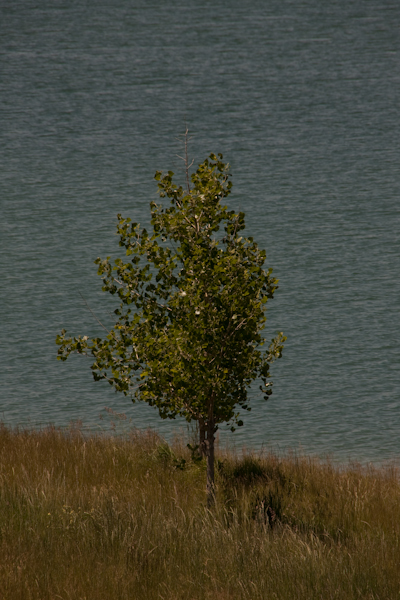
8. Image Quality: Image quality is always subjective to the viewer/shooter, so here I will just let everyone defer to their own tastes by sharing a few sample images taken over the last few months:
Kissing Squirrels
Chopper Series
Miscellany:
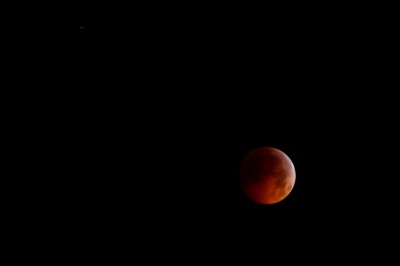
Other features that bear mentioning here include the locking mechanism and the focusing rings. I thought about including the latter in the build quality, but decided to bring it in here for discussion. First, the locking mechanism is a handy feature to have for keeping the lens locked in place to prevent lens creep. The idea is a good one, but for this particular lens, it would not lock in the “zoomed” position, where I would have thought lens creep would be more of an impact, than in the “closed” position. Having said that, from the lunar shots I did (as shown above), the fully extended lens did not experience much, if any, creep. This could be because the lens was recently brought back from a service stop where knobs and buttons and toggles were all tightened and such.
This brings me to the focusing rings. The rear focusing ring is the one used for fine tuning and the front ring is for zoom. This was an adjustment for me as my other zoom lenses have these rings reversed (where the zoom is on the back ring and the focus is on the front ring). it forced me to change my style of shooting a little, but since I was working off a lens-mounted setup most of the time rather than a camera-mounted setup, my shooting habits were already being adjusted anyway. The last part is that the zoom ring did seem a bit tight to move. Whether this is by design or because of the recent factory adjustments, I am not sure, but it was just a tad stiff to adjust.
Summary:
All in all, the Sigma 50-500mm is a great lens. It stood up for the challenges of both wildlife and aerial photography, as well as lunar and even a portrait shot of the canine companion. The compression it exhibits at the far end (which is characteristic of these long zooms) is to be expected, but I would probably not be using this for landscapes unless I was in a pinch and had no other lens with me. Still, it could be done, depending on what kind of landscape you are trying to capture. The zoom really had no noticable effect on image quality without going into some serious pixel peeping, and thus, meets or exceeds all criteria that I can think of. I would definitely make a positive recommendation on this lens for either a wildlife or sports shooter where distance from subjects is often greater than 10-15 feet. (The minimum focusing distance at 500mm is something like 6 feet!)
That does it for today – I hope you enjoyed the review and photo gallery from the Sigma 50-500. Here’s the final results/scores I give the lens:
Category
Score
Focal Range
8
F-Stop Range
7.0
Lens Motor Noise
8.5
Size/Weight
7
Build Quality
9.5
Optical Stabilization
8.0
Cost
7.0
Image Quality
8
Have you shot with this lens? Share your own thoughts in the comments or with me via email. Likewise, if you have a lens you would be interested in having me review, feel free to drop me a line or share your requests through the comment area as well. Special thanks to Sigma for giving me such an extended testing period to review the lens, and we’ll see you here again soon! Happy shooting!
The subject of today’s post: The Sigma 18-250mm lens review! You read that right – Sigma has a lens that covers the range of 18-250. This allows you to go from relatively wide angle shots at the 18mm end to zooming pretty far in at 250mm on the opposite end. But, is the quality really there?
I took the lens through its paces over the weekend and here’s what I found out about the Sigma 18-250! In the interests of full disclosure, I should also note that this was actually requested by myself for review, and that I am not being compensated in any manner by the good folks at Sigma. So, this is, in fact, a loaner and I am required to send it back no later than June 26th. Since I will be busy next weekend, decided I should get the review shots done with this weekend so the lenses can be shipped back on schedule.
Pros:
Weight – this has a nice solid feel to it. With I think a total of 13 elements in here, it’s no surprise that it doesn’t feel the slightest bit flimsy. The weight adds a certain durability, but I still took things carefully as this is only on loan from Sigma for the purposes of this review. Compared to the 70-200, it certainly felt heavier, but I am not sure what the comparative weights are. All in all though, I think the weight is a good thing.
Noise – Excellent! My prior experience with Sigma is my own 70mm Macro, which does not have the HSM (hypersonic motor). That thing is NOY-ZEE! This, on the other hand, rivals the USM operation of Canon lenses. Compared to the 70-200L glass I own, the two are pretty close to each other in terms of silence in operation. The test I did for this was switch focus to manual, then take the lens all the way out to the opposite end of its last focus point. I then switched it back on to AF and listened for the motor operation. Sure, I could hear it when listening, but man was it quiet!
Range – This is without a doubt, my most favorite element (bad pun) of this lens. The fact that I could go from wide angle work to close up work with such ease makes this an ideal lens for things like photo walks (which are becoming more and more popular), or for just a go-to lens on a regular basis without having to switch out.
OS – Optical Stabilization – the equivalent of IS on Canon lenses. While I don’t own a Canon IS lens for direct comparison, I will say that it went a full stop faster than my 70-200mm CanonL f4.0 did at the same focal length/light. In a day and age where fast glass is becoming pretty much the standard, I would say this meets the mark.
Size – This lens is remarkable compact – standing at almost half the height of my 70-200 comparison lens. Think about that – a wider range of zoom and half the length. I can store this vertically in my bag, saving precious cargo space for other accessories and accouterments. Alongside would be the 70mm Macro, the 10-22mm, lensbaby, flash and other such items. Very tempting for that reason alone.
Feel – The signature brushed metal feel of Sigma lenses is present here and it just exudes “cool” and “professional”. No bells or whistles, no fancy L rings or anything, just brushed smoothness. Gotta love it!
Image Quality – The bugaboo, the real deal, the end result – the pictures! So how does it stack up? Pretty well actually, but rather than wax on, I’ll just share some images I took for you to judge the IQ – just remember to distinguish IQ from compositional quality! 🙂 Here’s the results…
Cons:
Weight – Yes, I am listing weight as both a pro and a con – the weight did get to me after a while of shooting on the 40D. While it’s durability is not in question at all, the heaviness can get on your wrist and forearm. I should put this qualifier out that I am still recouperating a tender arm from our move last July, which I am for the most part over, but it still flares up with extended use. So, things like shooting for a day can wear on me. Lighter is always better, but if I had to choose between durability and lightness, the former would win every time. Take what you wish from this con then…’nuff said.
Cost – It retails at B&H for $529, which is always a big price tag to swallow no matter what you are buying. Then again, when you look at a comparable lens from Canon that has the OS/IS built-in, the Canon counterpart goes for almost twice that at $1025 (and you still don’t get the same range of focus). While it may be a lot to pay on first glance, you really are getting quite a bit of bang for your buck.
Truth be told, I couldn’t find much else to nit on. I also liked the fact that they made this lens so you can put the lens hood on while also leaving the cap able to attach. Don’t ask me why, but I like that… Believe it or not, the lens also performed fairly well with portrait work too. I did a few test shots with yours truly as the subject and even got one I liked! So, would I recommend this lens? Absolutely! To see a complete gallery of photos I took this weekend, including the portrait ones, and even a few of the moon last night with a TC attached), follow this link:
Well, that should be enough content for the day (I know, my reviews are long-winded), so get out and shoot (with a Sigma if you like! 🙂 ), and we’ll see you back here tomorrow. Happy Shooting! Don’t forget – would love to hear reader thoughts and ideas for product reviews – let me know in the comments or via email!