As with most things, your camera needs maintenance too – and I’ve waxed here periodically about establishing a maintenance schedule, cleaning schedules, and the whole schmear – but I’ve never addressed the specifics of cleaning that most important piece of equipment – the sensor in your camera. As I dive in here, it bears mentioning that I am not advocating any one of these over another – just sort of laying the foundation on the various ways that are available:
1. Having someone else do it – Most camera stores offer this service for around $50, so if the idea of getting anything near your sensor just gives you the heebie-jeebies, by all means, this option is a good one for the nervous Nelly.
2. Air Blowers – These are rapidly becoming one of the more popular options as they are relatively cheap, easy, and don’t require messing around with chemicals. You simply put your camera into the cleaning mode, insert tip of the air blower near the sensor and puff it a few times remove and you are done. Some claim fantastic results with these while others say stubborn dust won’t come off from this method. The advantage of this approach is that you never have to touch your sensor (technically the filter in front of the sensor) with anything! The downside is that results may not get everything off.

Giottos Rocket Blower
3. Sensor swipes – Certain swipes are made just for camera sensors that use hydrostatic charges to remove dust from your sensor. It’s got an advantage in that it’s a dry cleaning approach so requires no chemicals. I have heard of some who are reluctant to use this as foreign fibers and materials can get in the swipe which could scratch your sensor.
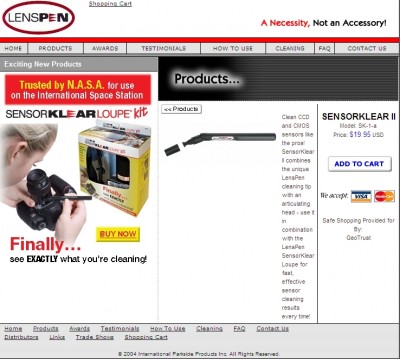
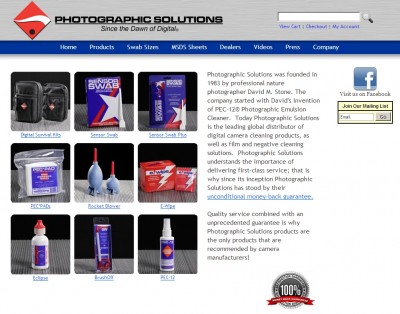
4. Chemical cleaning – Pec Pads, Eclipse alcohol and sensor swipes all combine in this method to give the most thorough cleaning, virtually guaranteed to remove even the most stubborn dirt from your sensor. The risk – doing it wrong can permanently damage your sensor and the cost of buy-in is a lot higher than other methods. Once you buy-in though, the long term cost drops rapidly!
Since I only mentioned it briefly at the beginning, I should also clarify that the idea behind cleaning your sensor is actually a misnomer – all of these solutions are cleaning the filter in front of the sensor – the sensor technically never gets cleaned unless you use option 1 – sending it in for a cleaning. All the camera vendors (Canon, Nikon, Pentax, etc.) offer this service, but the downside there is multi-faceted in that it’s usually more expensive, you have to go without your camera for a period of time, and there’s shipping involved!
What methods do you use? I know some people that combine multiple approaches, while others simply just shake it out once and a while (heck, I read a story once of a guy that used his t-shirt! – not sure how valid it is, but you get the gist). Sound off in the comments with your own cleaning products and approaches!