Which Photos Count

There’s an age old axiom that says you truly are not an expert or well-versed in any field until you’ve practiced it for 10,000 hours.  Think about that number.  Ten thousand!  That sounds pretty daunting.  It means taking a lot of photos to get to that level.  Let’s just assume for a minute that in photography, 10,000 hours = 10,000 photos.  That would still take a lot of time to build out a photography portfolio

If you take one photo a day, it will take you 10,000 days to become fluent with photography, or 27 years!  One good photo a day means it will take you twenty seven years to become fluent in the field of photography.  Look at how that extrapolates out:

Two photos/day = 5000 days (14 years)
Four photos/day = 2500 days (6 years)
Eight photos/day = 1250 days (3.5 years)
Sixteen photos/day = 625 days (2 years)

I don’t know about you, but the last time I took sixteen good photos in one day was…well, um, never really!  I could go into a long soliloquy about learning the craft encompassing more than just taking good photos.  And it’s true.  You learn when you take bade photos, because you’ve eliminated a process that doesn’t work.  You also learn from reading articles, books, attending seminars and workshops.  Learning a craft is much more than just one photo, but the math still holds true.  So, even if you spend four hours a day learning about photography, it will be a long time before you are fluent (at least 6 years anyway, right?).

The caveat now is that learning a trade or craft is more than just study and reading – it’s also doing.  So, in all of this, let’s say it breaks down to about 25-25-50 in percentages.  I say this primarily because you learn so much more from doing than studying and reading.  In the field of photography, this means taking pictures.  You have to take pictures (both good and bad) to become a good photographer.  Now comes the stickler – the question that I was asked and is the title of this post:  which photos count?

When learning, and studying your craft, does the crappy iPhone photo count?  The stupid cheesy grin shot you did with your “bff” at the beach?  My answer (surprise surprise) starts with “It depends…”  That’s the first part…the second part is:

What did you learn from that photo?

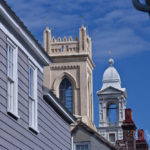
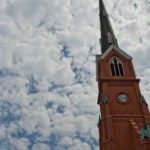
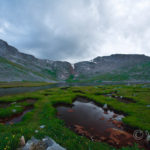
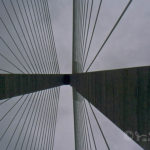
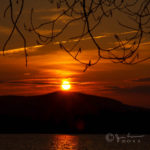
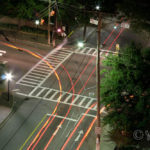
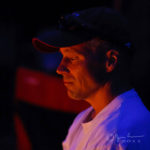
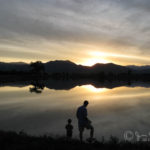
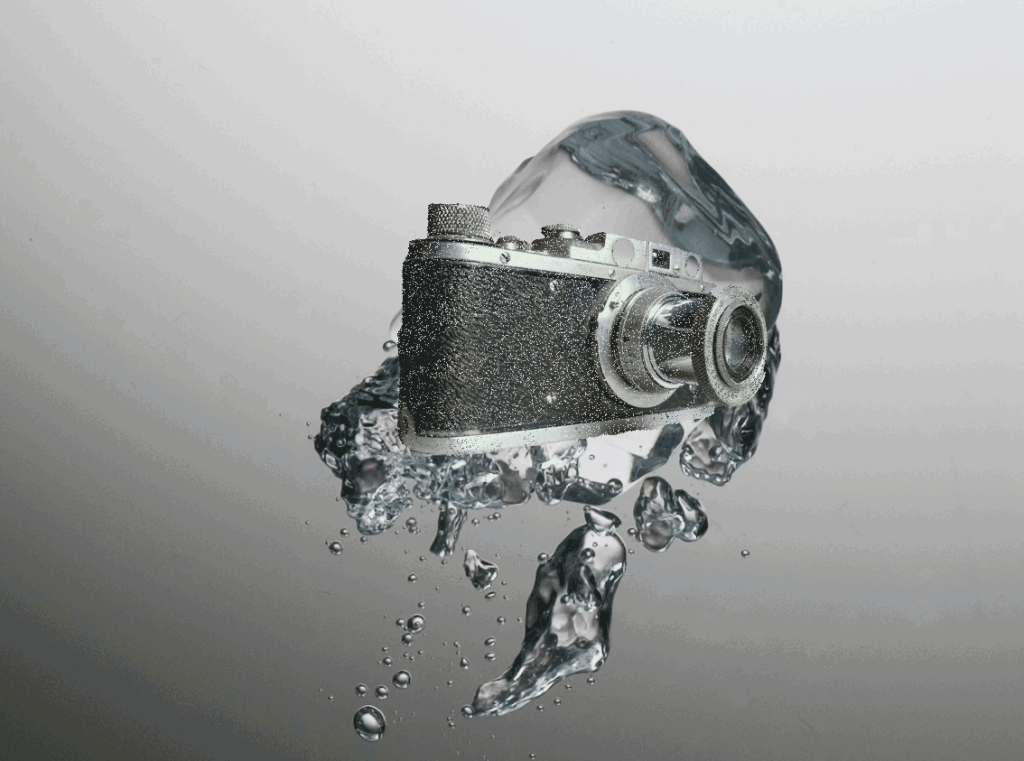
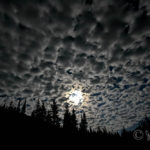
If the answer is – “I learned that on camera flash works with a portrait and the sun setting behind you”, then yes, it counts!  If the photo is “Well, I learned that on camera flash in a studio shot of a digital telephone doesn’t work too well because of excessive specular highlights”, then hell yeah, it counts!  The converse also holds though too.  If you take a snapshot during your vacation with yourself and your s.o (significant other) at Plymouth Rock, and it never sees the light of day past your refrigerator, then no, it does not count!  If you learn or gain nothing from a photo you took, it doesn’t count.  Here’s some shots from my history that I’ve learned from – can you tell which ones I shot at the beginning of my foray into the most recent?  (Don’t cheat and look at the meta data…which ones are first, middle, and last chronologically?)
The Falling Photo Bubble

Over the course of the last several days, a conversation has been happening in the NAPP forums regarding the “photography bubble”.  I am calling it this because just like the tech boom, the housing bubble, and other historical events, the photography industry seems to be having something of an adjustment in recent weeks and months.  Have you noticed it too?

It’s happening in many communities, workshops, seminars, and other such events where participation has dropped considerably.  From what I understand of things, communities everywhere are seeing marked drops in the active member rolls.  Many colleagues who teach workshops and seminars have also noticed a drop-off in attendance and interest.  The economy is certainly having an impact on the disposable income of many enthusiast photographers.  But it’s not just that…

Even the Worldwide Photo Walk, which only two years ago drew crowds that maxed out four different locales around Denver (at 50 participants per walk) is now barely cresting the 100 member count among only three active ones.  The downtown Denver one is maxed out for 16th Street Mall, but the Louisville one and the Boulder one still have several openings.  Know what the requirements for these are?  Nothing!  They’re free!

All you need is a camera.  It can be a camera from your phone!  It can be a film camera!  A pen camera, or even a pinhole camera would be enough to go out and take photos with.  Yet the attendance has dropped more than 50% from a mere two years ago.  Probably the biggest indicator for me is the amount of Meetup activity.  Leaders and managers for photo walks are not as active, and walks are getting fewer people.

So that means attendance at free sessions has even waned to less than 50% of where it was even two years ago.What happened?  Now a lot has changed between now and two years ago.  Economic times are harder…I get that big time!  But a larger trend is occurring in photography, and I think we should be standing up to take notice.  Why?

I suspect a certain degree of market saturation has happened, believe it or not.  Many people have hung out shingles.  There’s been so many workshops, seminars, and conferences held – everyone believing that there is an infinite desire to learn from anyone wiling to teach, lead, or share.  While the capacity to learn is endless, the capacity of the market to sustain an infinite amount of instruction is likely not sustainable.

The market has peaked!  Just like the tech bubble of the 80′s, the housing bubble of the 90′s, and even (as a friend put it in the forums) the CB radio bubble of the 70′s, the bubble has burst.  People are starting to hang up their hats, cameras, and photo gear.  Many have said “enough is enough”, and simply just don’t have the time, energy, or interest to sustain their habits, creative endeavors, and SOHO businesses in photography.  The market waxes and wanes, and the time to wane has come to pass…

It’s kind of sad to one degree, because it’s never easy to sustain a creative vision or energy in a shrinking market.  Monetizing that vision is even more difficult because the almighty dollar has been stretched to capacity – and as a result, I suspect that as the dust starts to settle in the coming weeks and months, many will have stopped their craft.  As I said, a sad thing, but lest we all be concerned that our own craft will die, or go silent, it’s times like these that we must muster the energy, motivation, and vigor to continue on.  Not necessarily unimpeded, but at least try to continue…it’s those that continue through the best and the worst of times that will be more successful in the long run!

***

What kind of indicators have you seen that the market for photography, and photo education has seen a peak?  Has your own interest or ability to participate waned in recent weeks and months?  What trends have you seen in your own market and demographic with regard to the photo community?

Take Time to Play

Ever feel like your creativity is  at a standstill?  Something got it on hold?  The common belief is that creative or mental blocks come from trying too hard to actually be creative.  So, how can we stop trying to hard?  It’s not that we should stop trying per se. It’s more that we need to stop trying to make every image a powerful image.  Being playful often starts with just laughing at yourself.  Seriously…laugh at yourself.  Do something stupid or silly.  That becomes infectious and can move you forward to play.

In being playful with your work, it’s often even more helpful to put down the tripods, and SLR’s.  Put down the lenses and filters. Put down the soft boxes and fill flashes.  Being playful means letting go of the “rules” of photography.  I’m reading David DuChemin’s book, The Inspired Eye (available now on his website – use EYE3Free for 20% off through Sat.), and in it, he speaks to this idea that that inspiration can come from play.

Some ideas from David include taking a day and try taking pictures whenever the mood hits.  Even if you are shooting through wet glass, or in a moving car.  Take a picture with your focus ring taped down.  The softness from the out of focus shot can force you to look at something more generic like the lines and energy of a scene.  It really is inspired capture that David is going for here, and that can definitely come from play.

One of my favorite images from my own library is a niece – I was literally playing.  I wasn’t expecting anything great, or show-stopper quality.  Just goofing around.  I was laughing and being silly, and so was she.  I took the camera to ridiculous angles, knowing it wouldn’t work (or so I thought).  Just goes to show you the power of play in photography:

Laughing Girl
Laughing Girl

The upshot?  Take time to play – only good things can come from it!

A Pro Level Point and Shoot?

I need some help!  Recently I had the idea of creating a Pro level Point and Shoot camera review corner as an interesting addition to the blog.  To that end, I am compiling a short list of P&S cameras that would be useful material here for the reading audience to have.  However, since most of my experience thus far has been with SLR gear, I could use some help in ensuring my final selections are both useful and of interest to the audience here.  So – I need your help!

You see, it’s a given that there are limitations to the “point and shoot” grade of cameras.  You simply don’t have the same degree of flexibility – no changing out lenses, a smaller sensor, more inherent noise, etc., etc. etc.  Yet, when you take an SLR, there’s a lot more gear involved, even if you “go light”.  At a minimum, you’re likely to have a camera body, a lens, a flash, and a tripod.  So, which do you do?  Thankfully, with the advancement of the “P&S” grade cameras, the differences between SLR’s and the “P&S” category has narrowed substantially.

Pro Level Point and Shoot

So, the question becomes:  which P&S is a good alternative for the SLR when you just want to take something and go, yet still have the malleability to capture the kind of images you want?  Now, if you ask ten different photographers this same question, you will likely get ten different sets of cameras in varying degrees of priorities.  That being said, a short list of high-end P&S cameras is always helpful to consider.  Here’s the short list I picked:

Canon:  Powershot S95Powershot G12
Nikon:  Coolpix P7000
Sigma: DP1x

There were some others I considered including a few from Panasonic, Sony, and Olympus, but in looking at the specs of those, all had an interchangeable lens feature, which makes them more SLR-like than most P&S counterparts, so I removed them from consideration.  Here’s the criteria I am using to consider cameras for inclusion in a P&S review section:

1.  True point and shoot design (no interchangeable lenses)

2.  Cost should be less than the entry level SLR for that vendor

3.  Raw or sRaw capacity is probably going to be a requirement…most high end P&S cameras I’ve seen have this feature.

These are of course, just subjective takes on which P&S cameras stand head and shoulders above the rest, and the criteria to classify ones for inclusion as “true P&S cameras”.  As they come through the doors, I’ll share thoughts and feedback with you, but for the time being, I’d also like to hear what others think of these selections.

Can a P&S really stand toe to toe with an SLR?  Is it even worth looking at?  What about the cameras themselves?  Are there others that you wish were included?  Do you own any of these?  What have your own thoughts and experiences been?  Sound off in the comments, and I’ll see what I can to do add others to this roster for upcoming review!  In the meantime, happy shooting, and we’ll be back tomorrow!

What? You’re Not Going to PSW?

Photoshop World – aka PSW – has become a week-long hug-fest, and is a bi-annual tradition,especially among the NAPP faithful.  As an active and sometimes promotional arm of NAPP, I can promise you that if ever given an opportunity to attend PSW, I will jump at said opportunity.  Having said that, I’ve been a member fr nearly four years now and still have not found the financial wherewithal to pony up the necessary funds needed to:

Photoshop World

1.  Pay for the cost of entry

2.  Pay for the cost of travel

3.  Pay for hotel accommodations

4.  Pay for the cost of food

It’s an expensive proposition, which I conservatively estimate at nearly $1000.  This does not mean it isn’t worth the money, because it most likely is, even if for networking purposes only (and I am sure there are educational opportunities galore)!  Let’s face it – if you want to be a “player” in the photography world, there is usually justification to attend PSw either in Orlando (Spring) or Las Vegas (Fall).

My problem is that I am something of a one-man-show.  And photography is very much a secondary stream of income, when it even does present opportunities.  My primary job has always been in IT.  I suspect it always will be.  So, to find the time off for a traditional working stiff is tough – I am often needed, and earn precious little vacation time every year.  So, unless a company that values both my IT and photography skills hires me (Adobe, are you listening? ), I will likely not be in a position to attend this event.

As is often the case, I know I am not alone.  So, here’s your chance to let your non-PSW light shine!  What are you doing this week?  For me, I am taking a little time off between jobs actually.  After accepting an offer at a new company (I am not holding my breath for Adobe), I have a week or so to spare from my calendar (but not my budget) to travel a little, and am visiting family in both AZ and NY.  Let’s face it, family should always come first, and here is no exception.  This last weekend I spent in AZ, and coming up later this week is a trip to NY.  Maybe I’ll get in a little fall foliage out east, but not sure as the fall seems to be late arriving all over this year.

So, there’s my plans, and why I won’t be there!  What’s your excuse?  Why are you not at PSW?  Sound off in the comments!  See ya back here tomorrow, and keep on shootin’!  I’ll be back again with the August contest winner and a new contest for September that will knock your socks off!

Buying Used?

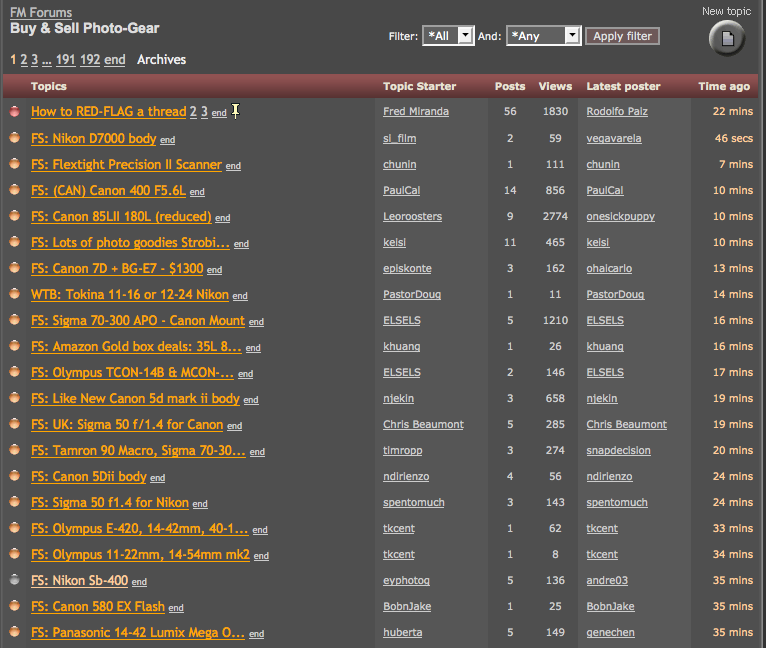
I’ve not been in the gear market for a while, but while discussing some technical stuff with colleagues over in the NAPP forums, had some time to check pricing in various outlets for used gear, and there are some deals going on these days!  In my previous experience, used gear would go for roughly 10-15% less than the new retail equivalents.  That percentage is apparently a bit low now as some gear is selling for up to 25% off new pricing!  So, if you’re in the market for gear, check out the used market for some serious savings!  Here’s a few items I saw in just a mere matter of minutes:

  • Nikon D7000:  New = $1200, Used = $1000 (16%)
  • Sony A580 kit: New=$899, Used = $699 (23%)
  • Sigma 50mm f1.4: New=499, Used = $420 (15%)
  • Canon 500mm f4: New=$7000, Used=$5600 (18%)
  • Canon 5D Mark II: New=$2500, Used=$2135 (15%)

There’s more out there, but that’s just a sampling of what you can expect to see.  The nice thing is many of these items include useful accessories like bags, straps, cases, and media cards as incentive pieces…savings add up even more (about a 20% average in my estimation).  For what it’s worth, I used the forums from Fred Miranda to look up used gear pricing and B&H for retail equivalents.  Your mileage may vary.

Fred Miranda Photography Forum
Buy Sell Listings

What sort of discount would you expect to pay for used gear over it’s  new counterparts?  Is 15% the new minimum?  20%?  30%  What’s considered a “good deal” anymore?  Since I’ve not been in the market to buy anything lately, am totally not sure where things are except what I’ve seen above.  Those sound good to me but I have not scoured all of the internet to be sure…so, let me know if you’ve had similar or different experiences.  Likewise, if you’ve got any of your own deals you’ve noticed recently?  Sound off in the comments!