Thank goodness for the blog!

Ever have one of those days where you know that you are doing something wrong with your gear – but for some reason it’s just not clicking (so to speak)?  I had just such a day recently.  I still have the DIY-style radio triggers from Cactus I bought last year (still have not upgraded to the Cybersyncs), and I was trying to light something off camera for a macro shot with this little solution.  Try as I might, I could not get the transmitter to fire my 580 when on camera.  For the life of me, if I tried one setup, I tried at least several dozen, all to no avail!  Finally, in frustration, I tossed the whole thing aside.

Then today, I was considering some advice on blog content to help “promote” archived content.  One such technique is to do a theme of  “a year ago today…” and reference a post from that same day last year.  Well, last year today I did a neat little write-up on…yup, these little Cactus triggers.  Lo and behold, the one combination of cables, wires and gadgets I did not try was the one I demonstrated nearly a year ago to the day that does work with these guys.  Oh the joys of camera gadgetry!  With all the gear and gadgets we own, it’s really amazing that we are able to keep this stuff in our heads as we do.  Well, mine must have sprung a leak, because I ended up reading my own blog on how to configure my own gear!  Well, thank goodness for the blog, eh?

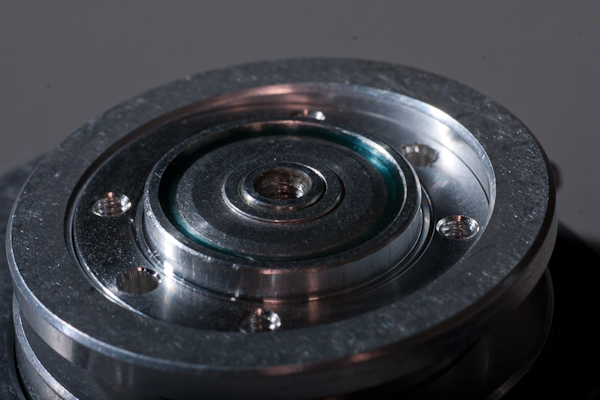
In honor of finally figuring out (from my own writing no less) how to create the shot I was trying to get, and in kind of a rebirth of the “What’s This?” series from last year, here’s that shot for you today.  The first person to guess what this is – wins!

Can you identify this?

I’ll give everyone a hint – it has to do with photography! 🙂  Oh, and as an aside, I am loving the noise reduction in LR3 Beta 2!  I was at ISO 100, but some noise still creeped in – nothing LR3B2 couldn’t cure rather quickly!

Also, in light of it being “tax day” here in the states, to lighten your mood, here’s a laugh from WTD (I’ve not posted one of their cartoons in a while – though I do keep visiting every day!)

Cameras at Ten Paces…

If you think about it, cameras often share terminology with them…we go out to “shoot”.  We aim, we fire, and our shutter release is often analogous to a trigger not only in what it does, but in the proper technique (slow and steady as you exhale).  So, when I read recently about a camera holster, it kind of made sense.  The entire system seems kind of cool, and they claim it’s designed for “even the heaviest of professional grade camera gear”.  In a line of work where gear is often just off-the-charts expensive, I was surprised to find the Spider Holster system in its entirety happily priced at just a tad bit over $100 ($109.99 plus shipping).

They’ve got some interesting videos and product shots on YouTube and their website, so it might be something worth considering if you are interested in eschewing the traditional camera bags, shoulder straps, neck straps, and other more typical carrying scenarios.  What I liked is that it takes the pin that attaches it to your belt and moves it off center so you can easily and comfortably rotate between shooting in portrait or landscape mode.  It also looks cool that the setup allows for use of just a regular belt that you would normally already have (although they do recommend that you use their belt for the heavier gear…)  Here’s a few of their product demos embedded here…

It does have almost a cowboy look and feel to it, and for the street photographer or serious photo walker it could be very useful, regardless of whether you feel like John Wayne or Dirty Harry.  Consider it a lightweight approach also if you are out scouting new locations to shoot.  Another feature that I like is that it also seems pretty able to keep your gear from falling from looking at the other videos of people running with the belt, going up and down stairs, and even snowboarding with it.

All in all, it seems kinda cool, and I’d say it’d be something to look into  as the summer months approach if you want to be “light and mobile”.  (This would have been very handy when in White Pocket, AZ).  Their company website is at www.spiderholster.com if you are interested in learning more about them.  The only question that really remains to be asked on this gear is:

Do ya feel lucky?

(Okay, lame, but it just had to be said!  Happy shooting and we’ll see you back here again tomorrow!)

1:45:57

You may think the subject is a typo or some sort of gibberish, but it’s not – that’s the length of the latest podcast that just went live over at PLM!  Kerry Garrison (of Camera Dojo notoriety)  is fresh back from Hawaii and I am back from a long set of downtime from a pretty yucky head cold, so we decided to join forces and cross-publish!  For our purposes here, consider it LDP #43!  You can grab the feed from LPD or iTunes! Continue reading “1:45:57”

A Primer on Licensing Your Work

With so many people likely covering the CS5 launch event later today (http://cs5launch.adobe.com/), I thought I’d take a different tack on things, since the launch really is just talking about when it will be available.  (In other words, everything you hear today will be nothing more than hype and PR excitement.  Nothing to really sink your teeth into…except pricing, which has already been leaked):

  • CS5 Regular Price is $699 for the full version and $149 for the upgrade…
  • CS5 Extended Pric is $999 and $349 respectively…

So, for something to sink your teeth into – here’s the latest short of an larger article I am working on that covers the exciting, heart-stopping, living on the edge, never-say-die, run ’til you drop matter of…

Photography Licensing

Okay, so maybe it’s not that exciting, but think about licensing for a minute.  There are so many terms bandied about when it comes to licensing and usage, fees and rights, that it can be very difficult to navigate the jungle of not only what to charge, but which licensing approach will work best for you and your style of work.  Well, fear not fellow photogs!  Today, I’m going to take a look at some of the basic concepts and  terminology of licensing.  While this is not legal advice, consider it a resource that you can use as a springboard or basis for understanding.

First off, let’s get a handle on what exactly the term “licensing” means.  Licensing (in a very general sense) means that you are giving permission to print your work.  Whether that permission is granted to an individual or a company can define particular licensing options for you, in the end, it’s permission to re-print or re-use your work that licensing grants the buyer.  (Yes, this means you as the photographer are the seller!)  Also, as a general rule, if the buyer wants to use your work a lot (say National Geographic wants to print it in their magazine, on their website, and include in videos and email flyers) then you can usually command a higher price than someone who just wants to buy a single print of your work (smaller usage).  So, more use equates to a higher fee.

Now that we know what licensing is, and how pricing in general is structured, let’s take a look at some of the more common forms of licensing that you will see.  There are several categories of licensing and it can get confusing when you start to cross categories, so let’s talk about categories first, so we can distinguish all the elements involved.  The first categorization generally used is between  commercial use and non-commercial use.  Other categorizations include Rights Managed and Royalty Free.  Before delving into details on other types of licensing available, let’s cover briefly what each of these means.

Commercial Licensing

Commercial licensing means that whoever is purchasing wants to turn around and make money off your images.  They are likely going to redistribute usually in the form of print publications like magazines, corporate papers (like annual reports, brochures, and other types of media that is distributed to a decent sized audience like their stockholders, prospective clients, etc.).  As a general rule of thumb, the wider the distribution (more copies of your pictures are being printed/used), the higher the fee for usage.

Non-Commercial Licensing

Conversely, a non-commercial usage generally means that the use is not going to be generating any money for the person/company that is buying the license.  It also means that the image purchase will not be redistributed elsewhere and this is usually part of the terms of the license.  Here, a good example would be a medical office buying an image to hang on their wall, a church making a flyer, or some other instance like that.  Since this is a much narrower distribution (a.k.a. usage), the fee will not be as high as it would for commercial work.

If you think  that was a lot of reading, there’s so much more!  Licensing can be customized for pretty much any use by an attorney!  You can cross any of these and get a literal jungle of licensing protocols, including others like First Use, One Time Use, and much more!  Attorneys are available that specialize in licensing and copyright.  If you really want to get into the nitty gritty talk with them!  This is just a beginning dialog…

Speaking of dialogs – got any stories of licensing or copyright that helped save your bacon?  I’ve read a few in the NAPP forums, and from several other outlets too.  Feel free to share your own thoughts and questions in the comments or via email!  Who knows – the podcast that’s coming out soon may feature a question or two! 🙂

In the meantime, keep on shooting, and we’ll see you back here again tomorrow!

What's In Your Backyard?

Remember the interview I did on a podcast a while back with Andie Smith?  One of the things we talked about was that you don’t really have to travel a whole lot to be a travel photographer – that sometimes your best shots are in your own area.  Well, a local Denver magazine, 5280 Photo, just put out an article in their most recent issue that talks about 52 things to do in Colorful Colorado this year.  Naturally, many are photogenic too.  So, for a dose of inspiration, don’t forget to look at what’s around you! Continue reading “What's In Your Backyard?”

No Blog Thursday…

My cold is still nagging me and after taking care of some administrative stuff for the blog and our upcoming house closings, I simply did not have the energy to complete my last project of the day (I’ve got to get back to writing in advance to make scheduling easier…).

So, today is officially a “no blog” Thursday.  See you back here again tomorrow…

CHDK is Cool!

So, while debating the intervalometer cost implications for my SLR – I decided to give the Canon CHDK a run for its money.  After downloading the CHDK for the A590 and making sure it didn’t break the camera I went out in search of an intervalometer script.  I think it’s a VB script, but can’t be sure…nevertheless the results were kind of fun!

I tried to include as much info in the teaser as possible, but if anyone has questions on how I did all this, feel free to share your questions (or feedback if you prefer) in the comments or vial email!  Here’s a dry run of my daily commute home (if only the real time commute went that fast!):

[display_podcast]

Happy shooting!  If you have your own time lapse productions, feel free to link them in the comments too!  See you back here again tomorrow… 🙂

The Rest of the Story…

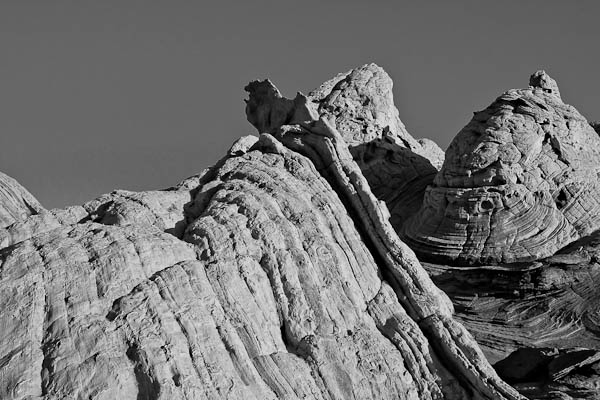
Last Monday, you learned of my trip to White Pocket, AZ.  I met up with fellow photographer/blogger Rich Charpentier of “The Airstream Chronicles”.  As we left off last week, he had met me at the Page, AZ airport, and we were heading off into the Arizona desert.  The ride was smooth at first, but as soon as we started the off-roading, things got a little bumpy.  True to form though, his Nissan Titan handled it with aplomb.  Check out this short video footage of the off-roading adventure, with Rich driving and me recording:

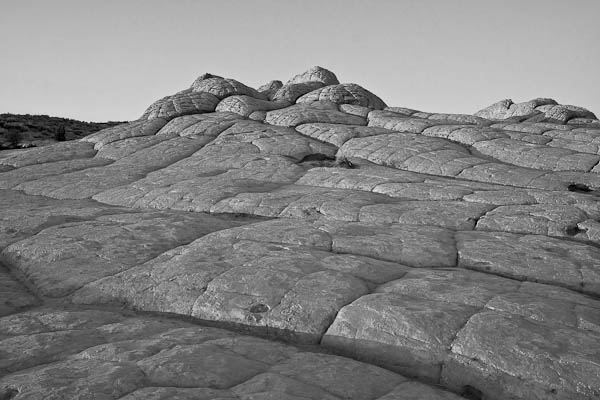
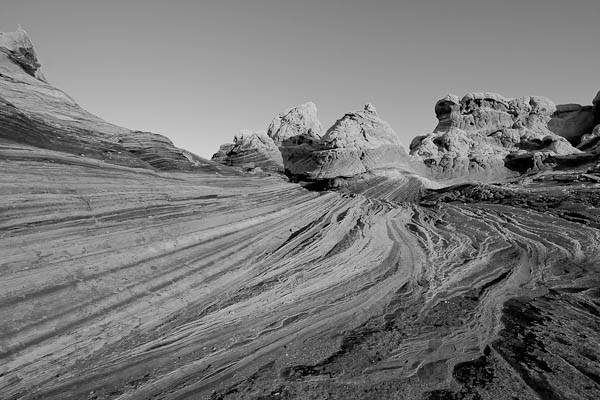
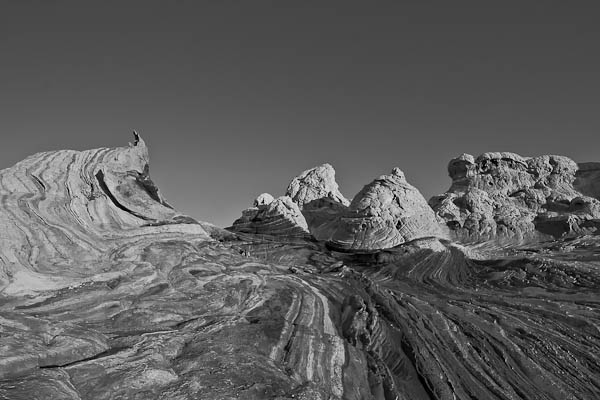
You’ve also already seen some of the shots from the trip, but here’s a few more to satisfy the image-intensive crowd!

White Pocket, AZ

White Pocket, AZ

White Pocket, AZ

White Pocket, AZ

Have a great Monday and we’ll see you back here tomorrow when I announce the winner of the March Contest and the theme/prize for April…it’s another good one so be sure to tune in for that!  Happy shooting and we’ll see you then!

An interva-what?

A friend of mine asked me if I had any recommendations the other day about time lapse…specifically software for post production.  It’s a great question and brings up a subject that I am actually quite interested in, although I have no hands-on experience with as of yet.   He’s got a Nikon D300, which apparently has the feature built in, so lucky him, because I need to go find an intervalometer now! 

An interva-what?  You heard me – an intervalometer!  It’s just a fancy name for a remote  control timer.  I like the former though as it’s cool sounding word!  Sounds kind of like the little ray gun that the martian was going to use to destroy planet earth in the classic Bugs Bunny Cartoon.  Or was that a modulator?  Well, anyway, much closer to reality, I have found myself recently considering adding another gadget to my toolkit!  Regardless of what you call it, these devices are considered  the tool to have when creating time lapse videos!  Some vendors include a timer setting on certain models, so be sure you check your owners manual before running out and buying one.  (More point-and-shoots have them than SLR’s – go figure!)  Nevertheless, it’s something I am looking at.  Here’s a few models that I am thinking about:

The Canon Specific Branded TC-80N3 (at B&H)

Opteka Timer Remote Control (on Amazon)

If anyone has other suggestions for remote timers, I am all ears! Of course with the time lapse, there is also the post production concern – although I am using Camtasia for video on my Windows box and iMovie or Quicktime on my Macbook Pro, so am pretty sure one if not more can handle time lapse.  Nevertheless, that is always a concern too, so feel free t sound off in the comments with your suggestions there too.   Interested in seeing time lapse photography in action?  Check out these cool links I’ve found:

  • http://www.youtube.com/watch?v=GDfqCFFvfag
  • http://www.youtube.com/watch?v=-ifTCa97G6Q
  • http://www.youtube.com/watch?v=pxCUlvEkQDg

Audio aside, there are some really creative approaches out there to time lapse.  Most I’ve seen are sunrise/sunset, moonrise, etc.  But the above three really captured my eye.  So, there you have it, something to inspire some creative juices going into the weekend!  Got your own ideas or links to time lapse?  Sound off in the comments!  Happy shooting and we’ll see you back here on Monday!