Another delay

400px

Sorry all, but the tutorial will likely be delayed (or possibly postponed) for this week.  Some news came in today that needed some time away from the computer and camera world – reality checked in and demanded attention.  I’l be back tomorrow with this week’s edition of “What’s This” and a walk around the web!  Thanks for understanding.  Happy shooting and watch those apertures!

Tip Teaser

Due to birthday circumstances, spousal attention requirements, and other frvolities of life, the tip for Tuesday has not been recorded yet.  I will try to get that recorded, produced, and published today.  In case it doesn’t make it out though, the teaser for it is that it covers displacement mapping with some pretty neat effects as a result.  So, check back in later tonight (I am guessing around 10pm EST) to see if I was able to crunch things together in time.   If not, it will likely be published tomorrow with the latest edition of “What’s this?”.  So, in the meantime, keep those cameras clicking.  Happy shooting and watch your apertures out there!

Geographic Composition

Jason Moore has an ongoing activity where photographers from different parts of the globe capture their perspective on various themes. I was invited to join this group of photographers a short time ago, and this is now my second contribution to the activity. It’s quite a bit of fun as it challenges you to think in new ways, and in participating you get a chance to see other perspectives and ideas. This is probably one of the most useful ways that you can challenge your creativity and to find new sources of inspiration.

Anyway, without further ado, the theme for the week ending Friday, June 13th 2008, was “Passing Down“. My shot is below, and I would encourage you to visit Jason’s blog to see the other visions for this theme. Thanks to Jason for administering this activity, and look for the next one near the end of the month!

Passing Down

Rituals – Cleaning your Gear

Checklist

Rituals are an important part of many cultures and belief systems. Yet rituals can also be patterns of behavior. We drive the same way to work every day, we tend to eat similar meals from one week to the next, and we do certain things each and every day, like brushing our teeth, taking a shower (hopefully anyway!), and a host of others. Well, just like other rituals, many of us become very fastidious about our work flow. We color manage things, we duplicate images, back them up, and save in multiple locations. Yet I’ve not seen anyone really talk about establishing rituals over cleaning their gear. In that area, I feel that I am something of a loner, because I do clean my gear in a very ritualistic pattern. It may be overkill to some, while to others it may not be enough. Nevertheless, cleaning our gear is something we should all consider making a part of our recurring activities.

Tomorrow is the second Friday of the month, and since I’ve set that date (just an arbitrary date, no specific logic behind the date other than I didn’t have anything else “scheduled” for that date at the time I came up with this) as my monthly camera cleaning date. I clean every piece of equipment I own. It takes a few hours, but that way I do maintain a regular schedule of maintenance for all this gear. So, today I am sharing my cleaning schedule with you.

My Gear Cleaning Ritual

  1. Part One – Wipe Down This can take anywhere from 10 minutes to 2 hours depending on amount of crap in my bag! I first take the battery out of camera and insert in charger. While camera battery is charging to full capacity I use lint free lens clothes (you can get a 12-pack from WalMart for $1) to wipe down the camera body, the lens casings, my CF cards, my flash cards, everything! Then I take out all the velcro dividers from my camera bag. With the bag empty I use canned air and spray out my camera bag. Then I wipe everything down with a only slightly damp paper towel. I’ll also pick any fuzzies I can see off my velcro tabs.
  2. Part 2 – Glass cleaning This takes about 20 minutes, depending on whether certain lenses need multiple swipes. I Use the Eclipse/PecPad/Sensor Swab kit for all my detailed cleaning. First I remove the lens caps (front and rear, and dust them off with my canned air. Setting these aside I take a PecPad out and dab a few drops of the Eclipse solution on it. In a light circular motion I wipe from the center of the lens to the edge and swoop it away in a fluid motion. I then return the caps to the glass.
  3. Part 3 – Card clearing and formatting I lightly tap the CF cards with the holes facing down and stack them label side up by my card reader. After each is tapped, I run them through my computer, copying any images off into a folder titled “Unsorted”. Once the content is safely moved, I then format the cards from the OS command prompt (for me it,s format E: /FAT32)
  4. Part 4 – Air cleaner I take my Giottos Rocket Blower and with battery compartment open I pump twice into chamber, and then close. I then turn the camera sensor side down, uncap and repeat in that chamber with the blower. I recap the body then and lay it sensor side down on a pre-placed static bag.
  5. Part 5 – Sensor Cleaning I prep the sensor swab according to instructions with firm tight folds. I take the now fully charged batter, insert in the chamber, turn the camera on and move the menu to sensor cleaning mode, flip the camera over and lay it down on the bag. Then I dab two drops of Eclipse onto the edge, uncap the body and angle the wand to 45 degrees, placing the edge against the sensor. and in one motion move it from the first edge to the far edge. Without lifting the wand, I then shift the wand to the opposite 45 degree angle, slide it up and align the top edge of the PecPad to the top edge of the lens and in a single light motion, slide it back across the top of the sensor mirror. Using the same fluid motion I then lift the swab off the sensor, replace the body cap with my other hand and set the swab down on the static bag. I then turn the camera back over, and power down.
  6. Part 6 – Accessories check I take the now mostly de-charged camera/battery combo and insert my CF cards back into the camera. All cards are formatted in camera. Once the formats are complete, I then insert back into computer one last time and copy the low res contact info image back onto all CF cards. The battery is then taken back out and recharged again. (I do have spares too that get charged, and I take this opportunity to also charge all AA’s and stuff back in my camera bag. I’ll check my notebook for enough paper, my pen for ink, flashlight for batteries, business cards in front pocket of bag, ensure I have at least 5 model release forms, and I’ll wipe down my Krages card and cheat sheet (two laminated sheets of info I keep in my bag).
  7. Part 7 – Repack Reassemble Velcro dividers and insert everything back into my bag
  8. Part 8 – Tripod Maintenance Take legs off tripod and wipe everything down there. Remove all quick release plates and do the same. I then re-assemble the tripod and tighten down all the legs again.
  9. Part 9 – Inventory List Print out checklist inventory and insert in camera bag (when travelling).
  10. Part 10 – Relax Drink an ice cold beverage!

So, which of these rituals do you include in your gear maintenance schedule? Did I miss anything? Does anything I am doing sound weird or wrong? What do you think? Share your cleaning schedule in the comments or via email: jason <AT> canonblogger <DOT> com In the meantime:

  • Happy Friday 13th
  • Happy Fathers Day Weekend
  • and Happy Shooting (watch those apertures!)

Magical Moments

wand

Does anyone remember from earlier this week why this post is so momentous? This is magical post # 200 for Canon Blogger. A few days off here and there, but since inception back on August 21st, 2007, I have made sometimes silly, sometimes serious, and sometimes useful posts to Canon Blogger. It’s been a fun ride thus far, and rather than take the kind reader on a blathering journey through some deep, thoughtful, meaningful, and insightful post laden with pearls of wisdom, trinkets of tips, tricks and techniques, I would rather just take a moment to say: Thank you!

Thank you to all the readers who have let me rant on occasion, wax philosophic on others, and bide their time for something useful, informative, or at the very least… entertaining. It truly has been quite the learning experience thus far. I would like to think I have matured a little, learned a lot, and improved the quality of the content that I’ve been putting out into the blogosphere. That judgement though, will reside with the readership. As of today, Canon Blogger (which I now affectionately call CB), is showing some pretty amazing numbers between Google Analytics and PodPress:

  • 55008 site visits
  • 78175 page views
  • 55775 feeds

Yeah, okay, that’s small potatoes when you look at the more serious bloggers, photographers, and other industry pros, but for a small time amateur blogger/photographer guy like me, I am just shattered that my little page has been picked up and read that much. So…THANK YOU! I’m glad you’ve enjoyed it thus far. Hopefully over the next 200 posts the quality of the content will continue to improve, and we’ll be able to look back on this day with a chuckle. Right now, I can’t imagine it – but, as the old saying goes “You never know…”

Today is also especially magical for me because I contributed an article to a free magazine called PhotographyBB which was published just the other day. This is my first published article, so it’s especially meaningful. I would like to thank Dave Seeram over at the PhotographyBB Magazine, and the folks in their forums who have accepted me into their community so graciously and with such open arms. I look forward to sharing many years to come with all of you. Do stop over to their site and feel free to join the community yourself. It’s a great group of people. The magazine, in it’s 5th issue, has many excellent articles (one by my) and an extra treat was to be able to contribute as the photographer “In the Spotlight”. Thne one that had planned to do it had something come up and could not, so I stepped in to help fill the content out for this issue. Very cool to be able to contribute to this work, and it really is a great read, so either stop over to their site and check out all they have to offer, or at least download the article linked below for a fun read when you have half an hour to spare.

So, it’s definitely some magical moments for me, and I just wanted to take today to say Thank You to everyone who has made this such a special day for me. You all rock!

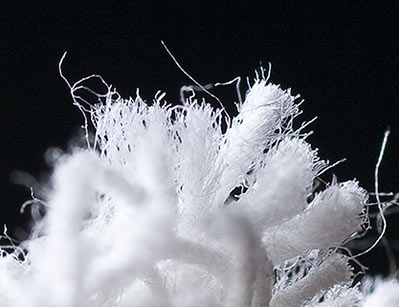
Week 2: What’s This?

307

For Week 2 of “What’s This?” – the image is another typical household object, so, take a gander at the image above, then take a guess in the comments or via email…This is a _____(fill in the blank)!

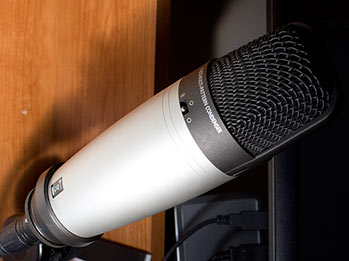
After a week of various responses both via email and in the comments, there was one correct guess via email, and the answer is – wait for it – a microphone! That’s right, my Sampson CO2 Condensor Mic that I record the podcast with almost every week. I zoomed in real close and didn’t even crop to produce the photo – so congrats to Thomas for guessing the right answer!

Week 1 WInner - Thomas w/ Microphone

Things are picking up for me for the remainder of the week, so a shorter post today. One thing I will suggest as a Wednesday Web Gem is to stop over at the new CB Flickr Group! I’m posting the full size pics from what’s this (the following week) and sharing photos in there as I get a chance. Stop in, register with the FLickr foolks, and share images of your own, discuss things from the blog, offer ideas, other tips and tricks, or whatever the theme for the day is! The link to the CB Flickr Group is here: CB on Flickr

Until tomorrow, happy shooting and watch those apertures!

Usual becomes unusual

Lighting Objects

The tutorial for this Tuesday, you may notice is not your typical Photoshop tip, trick, or tutorial. I took things outside of the desktop and into the real world to show you examples of thinking outside the box when it comes to lighting. By now we are all familiar with Strobist, and the methods he uses to encourage people to think about lighting and how to do things in an economically friendly way.

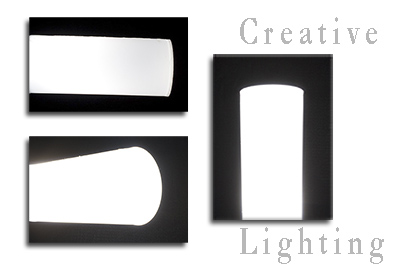
Today, I wanted to take a moment to share with you a few lighting ideas I’ve had and some of the effects they’ve produced. None of these home-made products cost me more than 15 cents! Anyway, I’ll let the tutorial stand alone, but did want to include the show notes:

Tune in to Strobist for anything and everything lighting you ever wanted to read – David Hobby is the lighting guru of the blog world!

David was interviewed recently on Studio Lighting, so now I’ve listened to their podcast, and it’s definitely one to return to. These guys just sound like they’re a lot of fun.

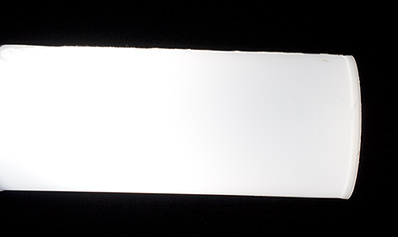
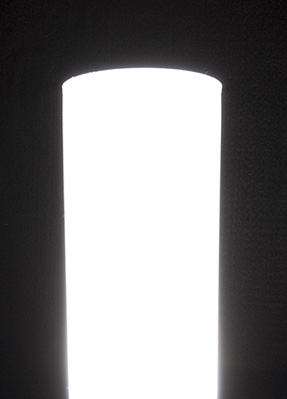
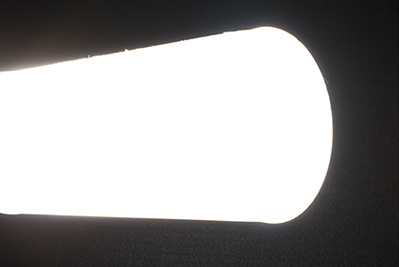
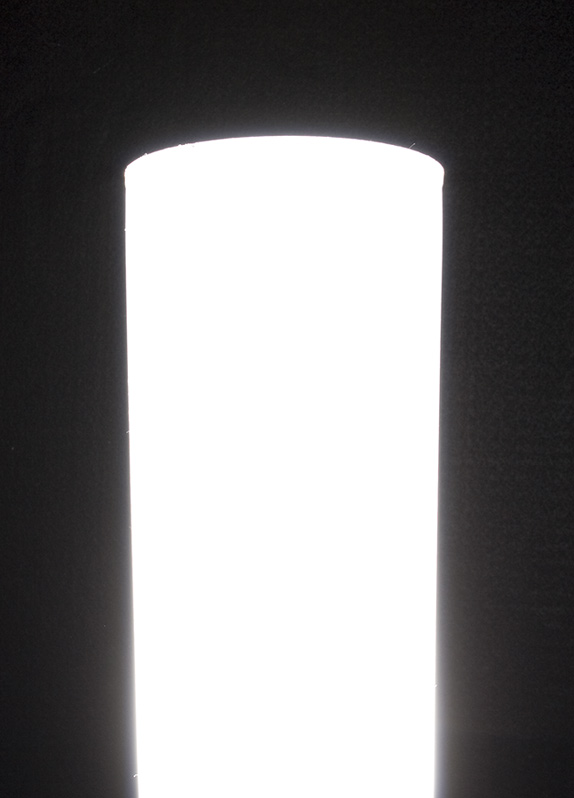
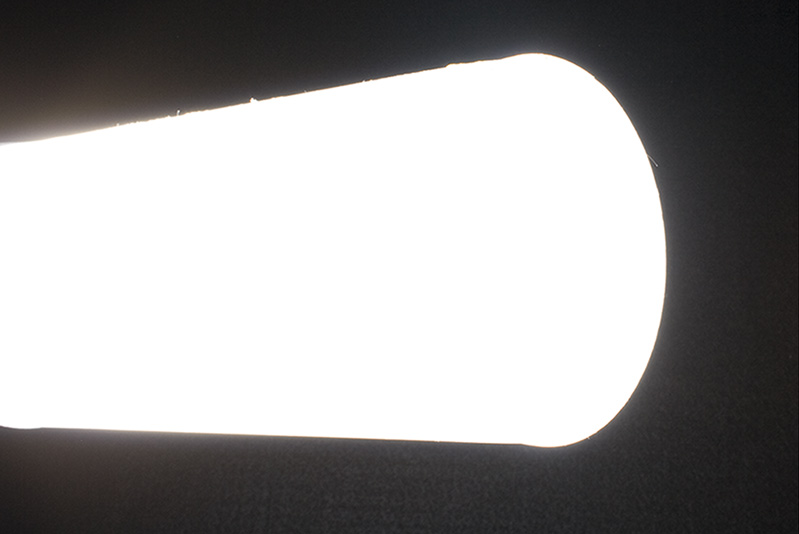
And the shots… you saw the montage up top, but here’s the individual shots from my diffused snoot:

Horizontal View

Vertical View

Angled View

So, there’s just a few examples of how to generate creative lighting by looking at usual objects in unusual ways. Tune in to the podcast to see what other stuff I’ve come up with. Because it was recorded outside of the computer though, I only have the Quicktime version. I am still looking into a decent Flash converter so I can put that together with the “intro” and “out-tro” clips, so if anyone has suggestions for that, I am all ears there too. Anyway, to close out, I’d like to pose another question: What have you come up with in the way of uses? Any everyday objects become part of your photo gear? Share ’em in the comments section!

Maintenance Monday (and a book review…kind of)

Wrench and Book

Hey all, it’s been a busy couple of days for the blog. I’ve been doing some research and maintenance on the blog to try and keep things interesting and to hopefully let more people know about the articles, essays, tips, tricks, techniques, and such that I’ve been sharing now for the past 9 months. I realized that I was in dire need of this when I saw my post count was up near 200 (hint: Thursday will be significant…) and I had not really taken any measures to get the blog registered in any directories.

So, after some research and study, I took some time Friday and Saturday to look at a number of directories and the types of blogs that are typical of those various venues. A couple that caught my eye include:

Of these, Alltop is definitely one of the coolest ones as they have a Photography category. On looking at the category, pretty much every blog that I’ve ever been to was on there along with a few that I’d not heard of. So, I sent them an email to inquire, and as you can probably tell from the new Directory listings on the side panel, they seemed willing to at least give me a try. So, thanks and shout outs to Alltop for the quick addition. Fair warning though – for those of you that may stop in there, you will likely find new must reads to add to your daily surf list. The one that caught my eye is a blog called Hyperphocal, with Chris Bergman. While still fairly new, the approach he seems to be taking with the blog is very similar to the one here at CB – sharing information, helping other photographers, Plus, his own blogroll reminded me of Digital Camera Resource, which I’d known about but forgotten for some time. So, thanks to Chris for putting that back on my radar.

Back on the directory subject though, the listings have been moved in the side panel to the bottom, as has the Google search box and the Feedburner subscription box. I think putting all that material in the same area gives a cleaner and smoother look to the blog. An iTunes one should be up shortly, I’ve just not had a chance to get the graphic I am looking for. If anyone has other subscription services they use, or that they can recommend, I am open to suggestions here as well. Feel free to stop in to any of these directories and share your thoughts of the blog, I’ve provided direct links to those directories where CB is already live.

The last bit about podcast directories though – even though I’ve been blogging and podcasting for a little over 9 months now, the idea of promoting the blog/podcast is somewhat foreign to me. Adding CB to a few directories seems like a good idea, but I would like to hear what others might suggest for venues or approaches to take. Should I promote the blog? If so, where? How? Are the ones I picked popular? I am in uncharted waters here, so would appreciate any suggestions or comments from the readership. if you’re reading directly, feel free to post in the comments. If you are reading from a feed, or would prefer to to comment publicly, please feel free to drop me an email. The address (as always) is jason <AT> canonblogger <DOT> com.

Other maintenance I did on the blog:

I removed the Dig button that was on each post. With a grand total of perhaps 20 digs over the last nine months, it was just another graphic that was taking up space and slowing down the blog more than it needed to. So, unless I start hearing screams for it back (which I doubt), the Dig button is toast!

A few pictures were added to the header rotation. I manually rotate that periodically to change out the look and feel, depending on the post of the day, so you may start seeing a little more variety there. If I can get to it on my “To Do” list, I’ll try to add full-size versions of the header images to the Flickr photo stream.

In photo news today, I got my copies of two reprints I ordered through reading The Online Photographer. The titles are “The New West: Landscapes Along the Colorado Front Range” by Robert Adams, and “The Photographer’s Eye“, by John Szarkowski. Being a Coloradan at heart, I tore the shrink wrap off Mr. Adams book first. I’m about a third of the way through it, and the black-and-white approach he takes to address both the man-made and natural landscapes (especially along the corridor of I-25) are pretty interesting. I would definitely recommend at least seeing if your local library has a copy of this book. I know spending $20 on a book of pictures can be off-putting to some, especially when we are trying to create our own works and possibly our own books. Nevertheless, I am quite happy with the purchase as viewing the works of others helps me to refine and hone my own vision that much more. Thanks to Mike J. from TOP for the heads up on these reprints – hopefully the few pennies he got from the referral purchase will pay for at least a few minutes worth of hosting!

Last, but not least, you may have noticed from the casual reference above, CB has joined the Flickr frenzy. That’s right, there is now a Flickr group for the blog. As I mentioned, I will start uploading full-size versions of pics that are rotated through the blog header, as well as some other shots that may be fun to view that weren’t really “croppable” to header size (is croppable a word?). Anyway, on the Flickr group, anyone is welcome to share images, tips, tricks, ideas, suggestions, feedback, or just share photos with one another. Here’s the link for anyone who’s interested: Canon Blogger on Flickr Fair warning though – if I see pics in the photo stream there I will likely be giving shout outs and links to your stream on the site. (Just keep the images PG-rated is all I ask…)

Well, that should be enough news for Monday. Until tomorrow, keep on shooting and watch those apertures!


Smell the Roses

Rose

Yes, we love this craft of photography, and we could spend every waking hour studying nuances of esoteric subjects related to the field, and peeping at the pixels of countless photos, analyzing techniques, and all that stuff. That wouldn’t be a very balanced existence though, and through having some balance, we can actually probably better focus on our craft when we do delve into it.

So, for this Friday, I’d like to suggest taking a break from photos every once and a while. Consider taking time to “step back and smell the roses”, and stop just taking pictures of them! Rather than thinking about your depth of field, whether to use a ring flash or a fill flash, what ISO to set, and what lens to use – take some time to just step back and enjoy the moment. The same holds true for any photography field. If you’re a landscape photographer, take some time to just enjoy that sunset, or that mountain range. If you’re a portrait photographer, let go of the camera and interact with your models and subjects.

It’s the interaction between the photographer and their subject that actually forms the connection. If you sped all your time taking the pictures, and never interacting with the subjects, your reason for taking the pictures can lose meaning beyond the dollars and cents. Remember, photography is a means of sharing your vision with the world. Losing sight of the vision, and the reason why it’s your vision can diminish both the message and its impact on your viewers. Through connecting with your surroundings, you can actually inspire creativity, and take your own visions to the next level.

I was reading through John Paul Caponigro’s new blog he rolled out recently, and found some audio clips on there – one of these spoke specifically to expanding your creativity, and he suggests closing your eyes to heighten the awareness of your other senses. This same philosophy can be applied to the concept above. By setting the camera down every once and a while (and stepping away from Photoshop and the computer), you can become more aware of the rest of the world around you. Heightened awareness is ultimately what will expand your vision, and in turn, expand your creativity. Enough esoteric mumbo jumbo though, just some food for thought as we move into the weekend. Here’s the weekly installment from What the Duck. Happy shooting everyone and watch your apertures!

What the Duck

Look for Lines

Shapes

For this week’s edition of “Thursday Thoughts”, I’d like to take a look at the subject of composition. We always are striving to enhance our composition, either by understanding the rules of composition better, or by pushing the envelope in new directions. With the explosion of digital photography, the decreased price of entry, and the abundance of opinions, now more than ever, if you really want to succeed in photography, it helps to get a jump on the learning curve by a better understanding of what works consistently over time. There’s a reason why we often refer to the Rule of Thirds, or the Golden Mean when talking about classic composition – because they work. Time and time again, when photos are composed along these rough guidelines, the results are more pleasing than the same subject without the rules of composition applied.

One of the interesting things though about these rules is how they all use some form of linear movement through pictures. Whether the lines are vertical and horizontal, diagonal or even curved, the way you compose your pictures along these imaginary lines will have an impact on the final result of your image. So, rather than looking at the rules of photography, let’s break it down into a more elemental context: usage of lines.

As I mentioned above, there are four ways in which lines can take you through an image, vertically, horizontally, diagonally, and curved. Knowing the impact each of these types of lines will have on your pictures can really help as you look for scenes to capture and share with the world. And, as the old saying goes, “knowing is half the battle”…

  1. Vertical lines – What creates vertical lines in images? In nature, things like trees are great examples of vertical lines. Architecture also provides excellent material for including vertical lines in your images. Are you a people person? Try taking pictures near someone’s feet, looking up. The vertical lines of their legs will have a tremendous impact on your pictures. So, what does this mean? Usually, vertical lines are connoted with stability and power. These lines will anchor your images at the base (or top) of where the lines start (or end.)
  2. Vertical Lines on Sailboat

  3. Horizontal lines – What creates horizontal lines? Horizons are great examples, and architecture also can provide horizontals. Looking for portrait examples? Try imagining a horizontal line across the bottom or top of someone’s eyes or teeth. We all love shots of sleeping babies too. Their bodies are usually horizontally composed. Horizontals usually are associated with peacefulness and tranquility.
  4. Vertical Lines on Sailboat

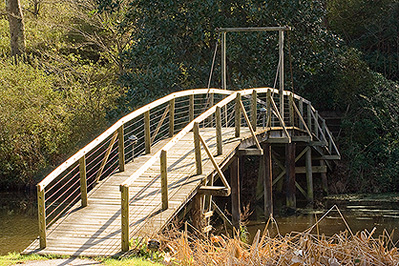
  5. Diagonal lines – What creates diagonal lines? This is a little trickier, because linear progression usually occurs (both in nature and in man-made objects) horizontally or vertically. This requires actually re-positioning your camera from its traditional position to find diagonals. Some examples that are easier to see include bridges, piers, and docks. Also, try looking at things at a different angle, or just looking in new directions. The sail lines of a boat are good examples of diagonals. Pitched rooflines work for architecture too. In people photography, the nose provides angles as do some jaw lines. You can also position people’s arms and legs to give an angular line in the picture. Diagonal lines are lots of fun because they make things more active and dynamic. I’ve even read about diagonals creating tension and suggesting motion.
  6. Vertical Lines on Sailboat

  7. Curved lines – What about curved lines? Curves are great at leading the eye through a picture. Imagine winding roads and curvy paths or ripples in waves ax examples in nature. For portrait work, the curvature of some cheekbones is a great perspective to base an anchor point of an image. Eyes also work here, as do smiles and facial expressions. Overall curves suggest motion because the eyes are always following the path the curve takes them on, but this motion is usually a smooth one, so there is also an association with grace.
  8. Vertical Lines on Sailboat

Lines are fun to find, especially if you mentally take note to look for particular instances. Take a day and say to yourself “today I am going to find curved lines” and see how many you find. Take notes and return with your camera (or take the shot if you have it with you!). With time you’ll find which types of lines speak to your preferences as well as where to position them in camera to yield the best composition.

Anyway, that’s the Thursday Thoughts for this week. I hope you all enjoyed it, and perhaps you’ll find new lines as you go out, cameras in hand this weekend. Happy shooting, watch those apertures, and find the lines!